
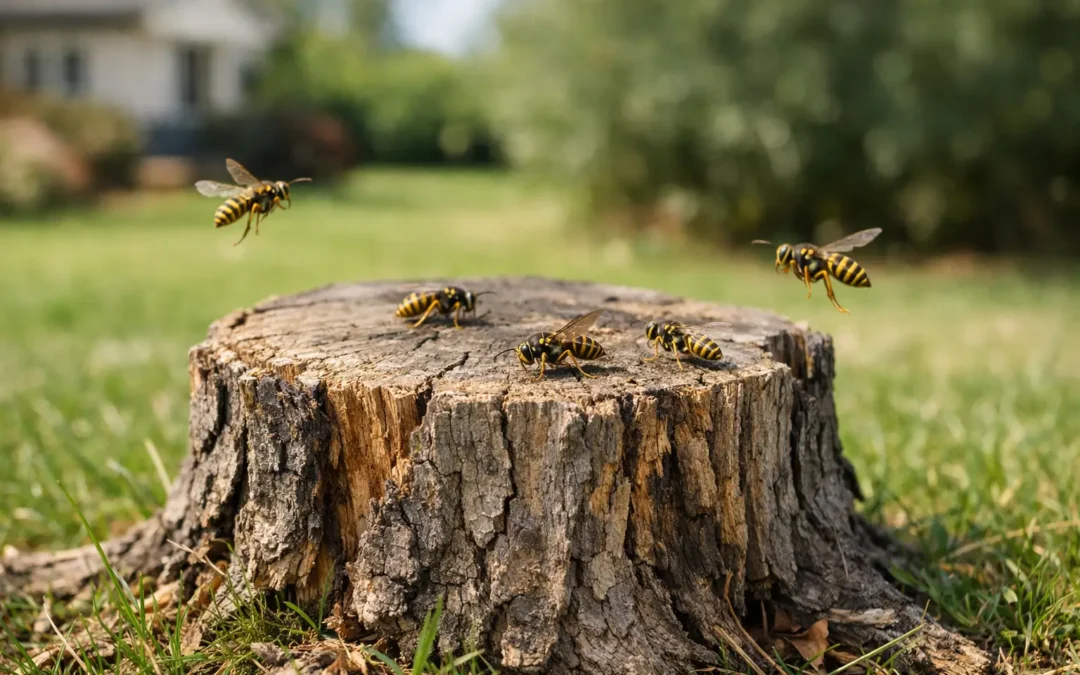
A stump near a patio, play area, garden, or mower path can make people wonder: do stumps attract wasps? The short answer is not exactly. A fresh stump does not act like a wasp magnet. But an aging, decaying stump can create sheltered spaces and insect activity that make the area more appealing to certain wasps.
That distinction matters. If wasps are circling a stump, the stump may be part of the problem, but it is not always where the nest is. Knowing what to look for helps you protect people, pets, and landscaping while deciding whether professional nest treatment, stump grinding, or both are needed.
Do Stumps Attract Wasps or Give Them a Place to Nest?
Wasps look for food, nesting material, and protected places to build. A sound, recently cut stump usually offers very little of that. As wood softens with age, though, cracks can open around the stump and root plate. The space underneath may become dry and protected, especially where soil has settled away from old roots.
Ground-nesting yellowjackets may use holes near a stump, gaps around roots, abandoned rodent tunnels, or cavities exposed as the wood breaks down. They do not necessarily nest inside solid wood. From the surface, it can look as though wasps are entering the stump when they are actually using a void beside or below it.
Decaying wood can also attract insects such as beetles, flies, and ants. Many wasps hunt other insects, so a busy stump area can become a convenient feeding location. Some species may collect weathered wood fibers to make their paper nests, although they commonly gather those fibers from fences, sheds, dead branches, and other untreated wood as well.
In other words, a stump is usually an opportunity rather than a direct attraction. The older, softer, and more hollow the stump becomes, the more likely it is to contribute to a wasp-friendly spot.
Why an Old Stump Can Become a Bigger Yard Problem
Wasps are only one reason an unremoved stump deserves attention. In Edmonton and surrounding communities, repeated freeze-thaw cycles, moisture, and lawn equipment wear can accelerate the breakdown of a retained stump. What starts as a low obstacle can become a soft, uneven area with hidden holes around it.
That creates several practical concerns. People can trip while walking or mowing. Mower blades can strike exposed roots or wood. A stump can continue producing suckers, occupy usable lawn space, and interfere with a future garden bed, fence, patio, or landscaping project. Fungal decay and insect activity may also increase as the wood remains in contact with the soil.
If a wasp nest is present, disturbance becomes the immediate concern. A mower passing close to a ground nest can trigger a defensive response quickly. Children and pets are also more likely to approach a low, concealed nest by accident than a clearly visible aerial nest.
Signs Wasps May Be Using the Area Around a Stump
A few wasps passing through the yard do not prove there is a nest. Wasps may be hunting, collecting wood fibers, or visiting flowers and fallen fruit nearby. Consistent traffic is more telling.
Watch from a safe distance during daylight. A nest is more likely when you see several wasps repeatedly entering and exiting one small opening near the stump, particularly along the root flare or in loose soil beside it. Their flight pattern often looks direct and purposeful rather than random. You may also notice a quiet, steady buzz near a cavity.
Do not poke the opening, pull at loose bark, pour liquids into a suspected nest, or try to cover it with soil. These actions can trap or agitate wasps without solving the problem. Avoid mowing or trimming around the location until you know what is happening.
Be especially cautious in late summer and early fall. Yellowjacket colonies can be larger and more defensive at that time of year, when workers are actively searching for food. For anyone with a known sting allergy, it is best to keep well clear and arrange professional pest control promptly.
Stump Grinding Helps Remove the Habitat
Once active wasp activity has been dealt with, stump grinding can remove the decaying structure and the root-zone voids that may be contributing to the issue. It also removes a long-term obstacle from the property rather than waiting years for it to rot away on its own.
Professional grinding is different from simply cutting a stump close to the ground. A specialist grinder uses a rotating cutting wheel fitted with carbide-tipped teeth to work through the stump and accessible root plate. The wood is reduced to chips, and the remaining material is taken below grade so the area can be restored for lawn, mulch, or a new landscape feature.
At Stump Chomper, stumps and root plates are ground to at least 10 inches below ground level. That depth helps create a more usable finished site and reduces the chance that the old stump will remain a hard obstruction just under the surface. The resulting woodchips can often be reused around landscaped areas, depending on the site and the property owner’s plans.
Grinding does not guarantee that wasps will never appear in your yard again. Wasps can nest in many places, including soil banks, wall voids, sheds, trees, and dense shrubs. What it does do is remove one aging piece of wood, its trip hazard, and potential sheltered cavities from the property.
Do Not Grind a Stump With an Active Wasp Nest
Stump grinding is powerful equipment work, and it should not begin while wasps are actively nesting in or around the stump. Vibration, noise, and disturbance can provoke a colony, putting the operator and anyone nearby at risk.
If you have confirmed or strongly suspect a nest, have a qualified pest-control professional assess and treat it first. Let them advise when the nest is inactive and safe to approach. The timing can depend on the species, the treatment used, weather conditions, and the nest’s location.
After the wasp issue has been addressed, the grinding crew should know where the nest was located. That allows them to inspect the work area carefully and plan the safest approach. A clear work zone also matters for gates, irrigation lines, utility markings, garden features, vehicles, and anything else near the stump.
Can You Leave the Stump and Manage Wasps Another Way?
You can, but the trade-off is worth considering. If the stump is young, solid, far from activity areas, and not causing landscape problems, monitoring may be reasonable after any active nest has been handled. Some property owners choose to leave old stumps for a naturalized area away from the home.
For most maintained lawns, commercial grounds, rental properties, and building sites, leaving it in place means accepting an ongoing obstacle. The stump may continue to decay, settle, attract insects, interfere with mowing, and take up space that could be used more effectively. If the area is near a walkway, playground, driveway, or outdoor seating, removal is often the more practical long-term choice.
There is also a difference between removing a visible stump and restoring the site properly. A stump cut flush with the lawn can still leave substantial wood and roots below the surface. Grinding below grade gives you room to add soil, level the area, and prepare it for reseeding or landscaping.
After Grinding: Getting the Area Ready Again
A clean stump-grinding job leaves woodchips and an excavated area where the stump once stood. Those chips can be useful as mulch, but they should not be treated as finished topsoil for a lawn. If your goal is grass, blend or remove excess chips as needed, add quality soil, level the surface, and seed or sod according to the season.
For a garden bed, the chips may be placed around established plants as mulch, keeping them back from stems and trunks. If you plan to build, install a patio, or plant a replacement tree, discuss that goal before the work begins. The former stump location may need additional soil preparation, and a new tree is generally better positioned away from the old root system.
A stump does not automatically cause a wasp problem, but it can become one more piece of aging yard infrastructure that invites trouble. If wasps are using the area, deal with the active nest safely first. Then consider whether that old stump is still earning its place on your property – or whether it is time to turn the space back into usable ground.