
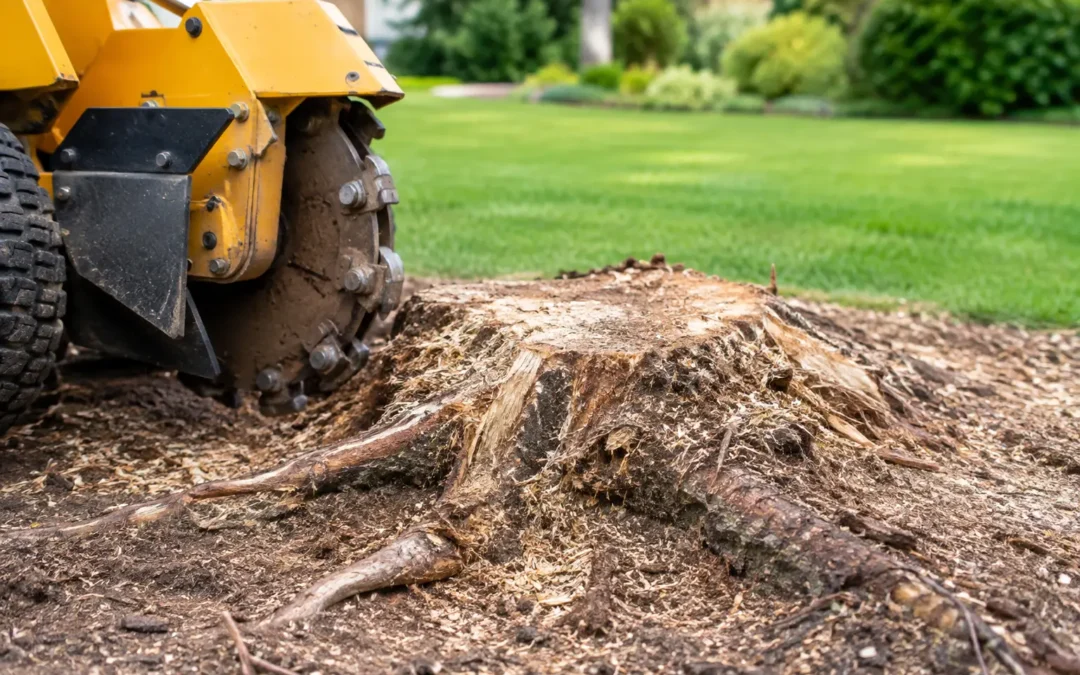
A tree can be gone from your yard while its root system is still doing quiet work below the surface. Homeowners often ask what happens to stump roots after a tree is cut down, especially when they are planning a lawn, garden bed, fence, patio, or new tree in the same area. The short answer is that roots do not disappear overnight. They gradually lose moisture, decay, and return organic material to the soil – but the condition of the stump, the tree species, and the removal method all affect how that process unfolds.
For most properties, stump grinding is the practical middle ground. It removes the visible stump and the dense root plate near the trunk, eliminates the immediate hazard, and lets the remaining roots break down naturally underground without tearing up the entire yard.
What Happens to Stump Roots Once a Tree Is Cut?
When a living tree is removed, its roots no longer receive sugars from the leaves. They cannot continue normal growth indefinitely. Over time, the roots dry out, are broken down by fungi and soil organisms, and slowly decompose.
This is not a fast process. Fine feeder roots may decay within a few years, while large structural roots can remain underground much longer. A mature tree’s roots may extend well beyond the canopy, although most are relatively shallow and become less substantial as they spread away from the trunk.
As decay progresses, the wood loses strength and becomes part of the soil ecosystem. In some yards, this is barely noticeable. In others, especially where a large root or root plate was close to the surface, the soil may settle as the woody material breaks down. That is one reason a freshly cleared area may need a little topsoil and leveling before it is seeded or landscaped.
Can roots keep growing after the tree is cut down?
Usually, no. A severed root system cannot sustain new normal growth without a living crown feeding it. However, some species are persistent and may send up shoots from roots or from the edge of a freshly cut stump. This is called suckering.
Poplar, willow, elm, and some other deciduous trees can be especially prone to suckering. If the stump remains intact, it may also sprout directly from the stump edge. These shoots are using stored energy already present in the root system. Repeatedly cutting them back can eventually exhaust that energy, but it can be frustrating and time-consuming.
Grinding the stump below grade removes the main source of stump sprouts and disrupts the root crown where many suckers begin. It does not mean every distant root vanishes on the day of service, but it gives the old system no useful base for continued growth.
What Happens to Stump Roots During Grinding?
Stump grinding is different from digging out a whole stump with an excavator. Full excavation removes the stump and much of the major root structure, but it can leave a large hole, disturb nearby landscaping, and damage lawns, irrigation, curbs, or underground services if done carelessly.
A professional grinder uses a cutting wheel fitted with carbide-tipped teeth. The wheel chips away the stump and the heavy root plate around it, reducing the material to woodchips. At Stump Chomper, the goal is to grind the stump and primary root area at least 10 inches below ground level, giving you room to cover the area with soil, seed, sod, mulch, or other landscaping material.
The grinder focuses on the part of the root system that creates the most immediate property problems: the stump itself, flare roots, and large near-surface roots around the base. Long lateral roots farther from the stump are generally left in place to decay naturally. Removing every root across an entire yard would be disruptive, expensive, and rarely necessary.
That distinction matters for property owners. Grinding gives you a clean, usable surface without turning a focused stump-removal job into broad excavation work.
Will Old Roots Damage a Lawn, Driveway, or Foundation?
Dead roots are not actively pushing upward the way living roots can. Once the tree has been removed, the root system is no longer expanding and seeking water. In most cases, remaining roots will not create new damage to a driveway, sidewalk, or foundation.
There can still be site-specific issues. Large roots already growing beneath a hard surface may have caused lifting while the tree was alive. When those roots decay, minor settling can occur. Likewise, if a tree was very close to a foundation or a utility line, the conditions deserve a closer look before any construction begins.
For standard lawn restoration, the main concern is uneven ground near the former stump. After grinding, woodchips are mixed with the soil. As that material decomposes, it can settle. Remove excess chips if you plan to seed grass, add clean topsoil, firm the area gently, and expect to monitor it through the first season. A small amount of additional soil later is normal, particularly after a large stump is ground.
Do Stump Roots Attract Insects or Fungus?
Decaying wood naturally attracts organisms that help break it down. Fungi, insects, bacteria, and soil microbes all play a role. That does not automatically mean an old root system will create a pest problem for your home or healthy landscape.
A retained stump is more likely to be a concern than buried roots alone. An exposed stump can hold moisture and provide a visible nesting area for insects. It can also host mushrooms or fungal growth that many property owners would rather not have near patios, play areas, sidewalks, or commercial entrances.
Grinding removes the exposed stump material and reduces the above-ground habitat. The remaining buried roots still decay, but they are less likely to interfere with the daily use and appearance of the property. If you see mushrooms in the former stump area later, that is often a sign that decomposition is occurring. It is wise to keep children and pets from eating unknown mushrooms, but their presence does not by itself mean the nearby lawn is unsafe.
Can You Plant Grass or a Garden Over Old Stump Roots?
Yes, with some preparation. Grass is usually the simplest option after stump grinding. Rake out or redistribute the woodchips according to your landscaping plan, add quality topsoil, level the area, seed or sod it, and water it consistently while the new grass establishes.
Garden beds also work well over a ground stump, particularly if you build up the bed with fresh soil and mulch. Avoid relying on a deep layer of fresh woodchips as your only growing medium. As wood decomposes, microbes can use available nitrogen near the surface. Mixing in compost and using suitable topsoil gives plants a better start.
Planting a new tree in exactly the same spot is more complicated. The ground may still contain large roots and woodchips, and the old tree may have been removed because of disease, poor drainage, or a poor location in the first place. If possible, plant the replacement tree several feet away from the old stump site. That gives its new roots better soil, fewer physical obstacles, and more room to establish.
When should you wait before building over the area?
For a shed, fence post, paver patio, or other structure, ask whether the old stump area falls within the planned footprint. A ground stump can be fine beneath a lawn or mulched bed, but a structure needs stable, properly prepared soil. Large voids created by decaying roots are not ideal under load-bearing work.
If construction is planned, tell the stump-grinding crew before the job begins. Depending on the project, you may need additional root removal, excavation, compacted fill, or a revised layout. A clear plan before grinding helps avoid paying to correct the area twice.
Signs It Is Time to Grind Rather Than Wait
Waiting for a stump and its roots to decay naturally is an option, but it is rarely the convenient one. Natural decay may take many years, and the visible stump remains a mowing obstacle, trip hazard, and dead spot in the landscape.
Grinding is especially worthwhile when the stump is near a walkway, driveway, play space, garden, commercial entrance, or planned improvement. It is also a sensible choice if the stump is producing shoots, collecting water, interfering with mowing, or simply making an otherwise well-kept property look unfinished.
A professional crew can assess access, stump size, nearby features, and the finished condition you want. With straightforward equipment access and a clear work area, the result is typically a below-grade stump site, reusable woodchips, and a cleaner area ready for the next stage of your property plan.
Before you schedule sod, a garden bed, or a construction project, take a moment to decide how you want to use the ground where the tree once stood. That small decision helps ensure the stump roots are handled in a way that fits the property, rather than becoming tomorrow’s landscaping problem.