
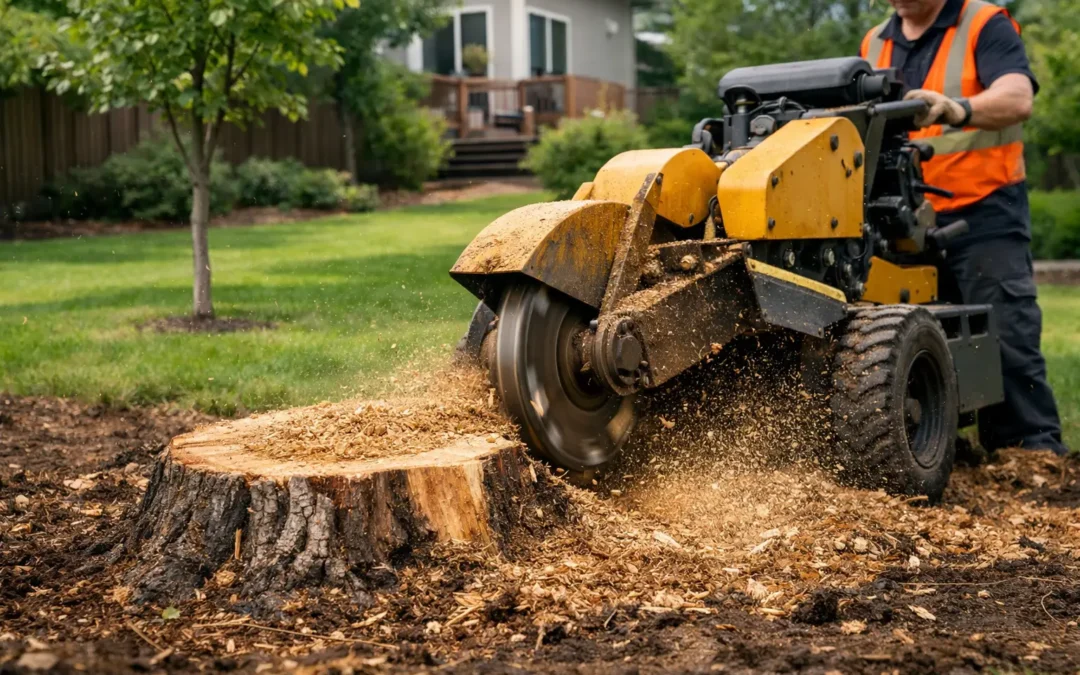
A tree can be gone in an afternoon, but the stump it leaves behind can keep causing problems for years. Professional stump grinding Edmonton property owners can rely on turns that leftover obstacle into a workable area for lawn care, landscaping, and everyday use. Rather than waiting for a stump to decay slowly or attempting a risky DIY removal, grinding removes the visible stump and much of its root plate below the surface.
For homeowners, acreage owners, landlords, and commercial property managers, the goal is simple: a safer, cleaner site that is ready for its next use. The right grinding crew brings the equipment, depth, cleanup, and property care needed to get there.
Why a Leftover Stump Is More Than an Eyesore
A stump may seem harmless when it is tucked into a corner of the yard, but it often becomes more inconvenient over time. It creates a trip hazard for children, visitors, tenants, employees, and maintenance crews. In a commercial setting, that can become a liability concern. On residential properties, it can make a walkway, play area, or garden bed harder to use safely.
Stumps are also hard on lawn equipment. Mower blades, trimmers, and snow removal equipment can be damaged when a buried root or low stump is struck unexpectedly. Even when the stump is visible, mowing around it every week leaves an uneven patch of grass that can make an otherwise well-kept yard look unfinished.
There are biological concerns as well. Old stumps can attract insects and provide a place for fungi to establish. Some species may continue producing shoots, called suckers, from the remaining root system. Grinding does not make every root disappear across the yard, but it removes the main stump and root crown where many of these issues begin.
Most importantly, a retained stump takes up usable ground. That matters when you want to expand a lawn, install a fence, build a shed, create a garden, lay a patio, or prepare a site for new construction.
How Professional Stump Grinding Works
Stump grinding is not the same as pulling a stump out with a truck or excavator. Full excavation can disturb a much larger area, especially when a mature tree has broad roots. Grinding focuses on reducing the stump where it sits, with far less disruption to the surrounding property.
A specialist grinder uses a rotating cutting wheel fitted with carbide-tipped teeth. These teeth work through the wood in controlled passes, breaking the stump and the main root plate into small woodchips. The operator progressively lowers the grinding area beneath the soil line, rather than simply shaving the stump flat at ground level.
At Stump Chomper, stumps are typically ground to at least 10 inches below ground level. That depth helps prevent the remaining wood from interfering with mowing, reseeding, surface landscaping, and many common yard projects. The exact approach can depend on the stump species, diameter, access to the site, slope, nearby utilities, and what you plan to do with the area afterward.
For example, a stump in an open front yard may be straightforward to access with a larger grinder. A stump behind a narrow gate, beside a retaining wall, or close to a garden may require more careful equipment positioning and site protection. Experienced operators assess these details before work begins so the process is safe and the surrounding area is treated with care.
What Happens to the Woodchips?
Grinding produces a mixture of woodchips and soil. This material is often useful, but it should be handled with your next project in mind.
If you are landscaping around the former stump location, woodchips can be spread as mulch in suitable areas. They can help cover soil and reduce weeds around trees, shrubs, and ornamental beds. If you plan to grow grass directly over the site, the chips are usually raked out or removed from the top layer so grass seed has better soil contact.
For a garden bed, new tree planting, patio base, or construction area, the site may need additional preparation after grinding. That could include removing excess chips, bringing in clean topsoil, compacting the area, or adjusting the final grade. Grinding creates the open space, but the finishing step should match how the ground will be used.
Why Below-Grade Grinding Matters in Edmonton
Edmonton properties experience freeze-thaw cycles, heavy seasonal moisture changes, and the demands of regular mowing and snow maintenance. A stump cut flush to the ground can still be a problem when soil settles, grass thins, or equipment catches the remaining wood beneath the surface.
Below-grade grinding gives you more flexibility. It leaves room for soil and seed above the ground-down stump, helping the area blend into the surrounding lawn over time. It also helps reduce the chance that a stump edge will reappear after weather, erosion, or landscaping changes expose the site.
Depth is especially valuable when the space has a practical future. If you are putting in sod, a garden bed, a walkway, or a small structure, you do not want to discover solid wood just below the surface after the rest of the project is underway. A professional assessment can help determine whether standard grinding depth is appropriate or whether your project needs additional removal and site work.
Preparing Your Property for Stump Grinding
A little preparation helps the job move efficiently and protects the area around the stump. Clear away movable items such as patio furniture, planters, hoses, toys, lawn decorations, and loose branches. Let the crew know about sprinkler heads, shallow lines, landscape lighting, invisible fencing, or any other features near the work area.
Access matters too. A grinder needs a reasonable route from the street, driveway, alley, or gate to the stump. If access is tight, mention it when requesting an estimate. Photos and a clear description can help identify the right equipment before the appointment is scheduled.
It is also wise to consider utility locations before any ground work. Surface and buried services may affect how a crew approaches a site. A reputable operator will work carefully around visible obstacles, but property owners should always share what they know about lines, drainage systems, irrigation, and recent landscaping.
Choosing a Stump Grinding Company
Price matters, but the lowest number is not always the best value. A clear estimate should explain what is included, such as the grinding depth, cleanup expectations, woodchip handling, travel considerations, and access challenges. Upfront pricing helps avoid surprises after the grinder arrives.
Experience also matters because stump grinding involves powerful equipment operating near lawns, fences, buildings, gardens, vehicles, and pedestrian areas. A trained crew knows how to set up a safe work zone, manage flying debris, protect nearby surfaces, and leave the site orderly when the work is done.
Look for a company that specializes in the work rather than treating stump removal as an occasional add-on. Specialist equipment and knowledgeable operation make a real difference in efficiency and finished results. A free, honest, and no-obligation estimate is a practical place to start, particularly when there are several stumps or difficult access conditions.
Common Questions About Stump Grinding Edmonton
Can I plant a new tree where the old stump was?
It is usually better to plant the new tree a short distance from the old stump location. Even after grinding, underground roots and decomposing wood remain, and they can affect soil conditions and make digging difficult. Moving the new tree a few feet away gives it better room to establish healthy roots.
Will stump grinding kill the roots?
Grinding removes the stump and main root crown, but it does not pull every root from the ground. Most remaining roots gradually decay underground. Some tree species may try to produce shoots afterward, particularly if the tree was cut recently. If that occurs, repeated cutting of new shoots generally weakens the remaining root system over time.
Can the ground be seeded right away?
In many cases, yes. Remove or spread out excess woodchips, add quality topsoil as needed, level the area, and seed or sod it according to the season. Watering and soil conditions will determine how quickly the patch blends into the rest of the lawn.
Is winter stump grinding possible?
It depends on site conditions, snow cover, frozen ground, access, and safety. Grinding can be possible in colder weather, but a crew should assess the property rather than promise the same approach for every winter job.
A stump does not have to dictate how you use your property. Once the wood is ground below grade and the area is cleaned up, you can move ahead with the lawn, garden, landscape feature, or building project you had in mind – with solid ground underfoot and one less maintenance problem to work around.