
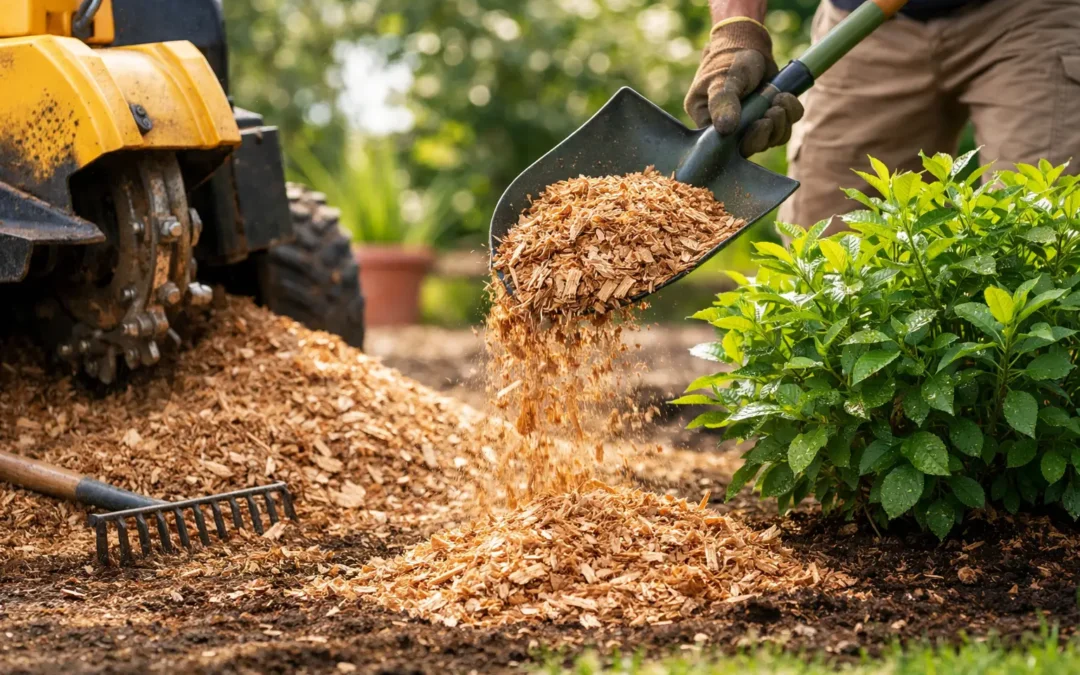
A fresh stump-grinding job leaves more than an open patch of lawn. It also leaves a pile of woodchips, root material, and a little soil. Many property owners ask whether they can use stump grindings as mulch rather than pay to have them hauled away. Often, the answer is yes – as long as the material is used in the right place and not mixed into the soil.
Woodchips can be a practical resource after a stump is ground below grade. They help cover bare ground, reduce weeds, and give planting beds a finished look. But stump grindings are different from screened landscape mulch sold by the yard. They are fresher, coarser, and may contain dirt from the grinding process. Knowing the difference helps you put them to work without creating problems for turf, vegetables, or newly planted trees.
What stump grindings are made of
A stump grinder uses carbide-tipped teeth to break down the stump and root plate into small pieces. Because the work happens at and below ground level, the resulting pile is usually a blend of wood fiber, bark, fine chips, old roots, and soil. The deeper and wider the root plate, the more material there may be.
That mix is useful, but it is not the same as clean arborist chips or decorative bark mulch. It can vary from a fluffy pile of mostly woodchips to a heavier pile with a fair amount of black soil. It may also include long, stringy root pieces that have not fully broken down.
For that reason, stump grindings are best treated as a natural, low-cost mulch for informal areas of the property. They are less ideal where every bed needs a uniform color and texture.
Where to use stump grindings as mulch
The best places for stump grindings are beneath established trees and shrubs, around naturalized areas, along fence lines, or on lightly used paths. In these locations, the chips can settle and decompose at their own pace while helping retain moisture in the ground.
Spread them in a layer about 2 to 4 inches deep. A thinner layer may not suppress weeds well, while an overly deep layer can hold too much moisture and reduce airflow to the soil. If the grindings are especially dusty or soil-heavy, use a slightly thinner layer and top it up later as it settles.
Keep the material several inches away from tree trunks, shrub stems, siding, and fence posts. Mulch piled directly against wood or living stems can trap moisture where it does not belong. Around trees, create a clear ring at the base rather than building a mulch volcano.
Fresh grindings can also work well in areas that need temporary coverage after a tree removal. A bare spot beside a garage, along a back fence, or in a future planting area can look cleaner and stay less muddy while you decide on the next landscaping step.
Do not mix fresh grindings into garden soil
The biggest mistake is tilling fresh stump grindings into a flower bed, lawn area, or vegetable garden. As wood decomposes below the surface, soil organisms use nitrogen to break it down. That can temporarily leave less available nitrogen for grass, flowers, and vegetables.
This is commonly called nitrogen tie-up. It does not mean woodchips are harmful mulch when laid on top of the soil. The concern mainly comes from incorporating large amounts of fresh wood material into the root zone.
Use the grindings as a surface layer instead. If you are preparing a bed for annuals, vegetables, sod, or seed, remove the bulk of the pile first. A small amount of remaining material in the ground is normal after stump grinding, but a thick layer of chips should not become part of your planting soil.
If you want to use the material in a vegetable garden eventually, compost it first. Mix it with green material such as grass clippings or leaves, keep the pile moist, and allow it time to break down. Finished compost is a much better soil amendment than raw stump grindings.
Be careful around lawns and new planting areas
Stump grindings left on grass can smother it quickly, especially after rain. If the goal is to restore a lawn, rake away the excess chips, bring in clean topsoil as needed, level the area, and then seed or sod. The ground may settle over time as deeper roots decay, so it is wise to leave the final grade slightly high rather than low.
New plants also need more attention than established shrubs. A young tree or perennial can benefit from mulch, but only when it is placed around the root zone without touching the stem. Use a modest layer and check it after heavy rain. Fine, damp grindings can compact more than standard bark mulch.
Replanting directly over the old stump location is rarely the easiest choice. Even after grinding, underground roots and remaining wood may interfere with a new tree’s root development. Moving the new tree a few feet away usually provides better soil, easier digging, and more room for healthy roots to spread.
When stump grindings should be removed instead
There are situations where hauling away the grindings is the smarter option. If you are preparing for a patio, shed, driveway, fence installation, or other construction, woodchips and roots need to be removed so the base can be properly compacted. Organic material breaks down over time, which can lead to settling under hard surfaces.
Removal is also worth considering when the pile is much larger than your available landscape beds. A large mature stump can produce a surprising volume of material. Spreading it too thickly just to use it all can create drainage and moisture issues.
Be cautious if the removed tree had a known disease, significant fungal decay, or a serious insect problem. Do not move potentially affected material around the property without first discussing it with the grinding professional. Local rules can also apply to certain tree species and wood movement. In those cases, disposal may be the responsible choice.
A simple way to sort and spread the pile
Before spreading the material, rake through it once. Pull aside large root chunks, stones, and dense clods of soil. The finer woodier portion is best for mulching, while heavier soil can be used to fill low spots if it is free of large debris.
You do not need to make the pile perfect. Stump grindings are meant to be practical, not polished. Still, a little sorting makes them easier to spread evenly and keeps oversized pieces out of your garden beds.
For a cleaner finish, use the coarse grindings first in less visible areas and reserve a layer of purchased mulch for beds near the front entrance or patio. This approach lets you reuse useful material while keeping high-visibility landscaping consistent.
Plan the cleanup with the grinding job
Before the crew arrives, decide whether you want to keep the grindings, have them moved to a specific area, or have them removed. That conversation can save time and keep the site organized. It also helps avoid a pile being placed where it blocks a gate, driveway, or future work area.
At Stump Chomper, professional grinding reduces the stump and root plate at least 10 inches below ground level, leaving a site ready for the next step – whether that means reseeding, landscaping, construction, or reusing the woodchips. The right cleanup plan depends on how you intend to use the space after the stump is gone.
Fresh stump grindings are not a one-size-fits-all mulch, but they do not have to be waste. Spread them lightly around established landscaping, keep them out of planting soil, and remove them where a clean, stable base matters. That turns a necessary stump-removal byproduct into useful ground cover while keeping your property ready for what comes next.