
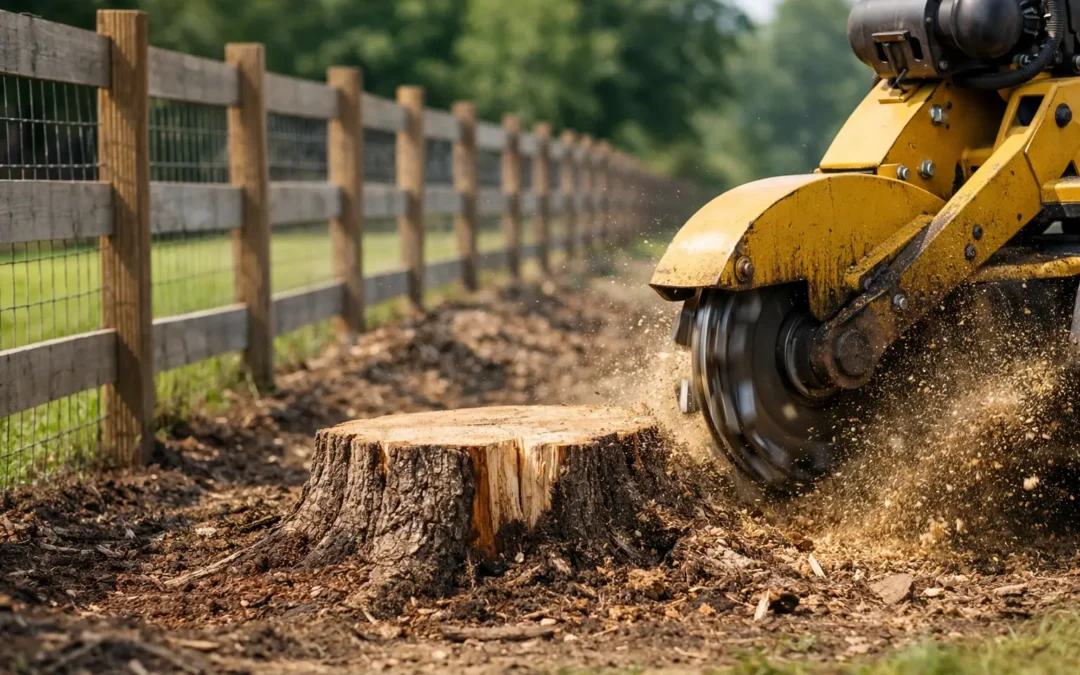
A fence can look like a simple project until a stump sits directly where the first corner post needs to go. Stump removal for fence lines is not just about making the yard look cleaner. It helps create room for properly placed posts, avoids hidden roots, and gives your fence contractor a stable, workable site from the start.
For homeowners, acreage owners, and commercial property managers in Edmonton and nearby communities, timing matters. Removing a stump before fence construction is usually faster, cleaner, and less expensive than trying to work around it after panels, posts, or gates are installed.
Why a Stump Causes Problems Along a Fence Line
A retained stump can interfere with far more than the visible footprint of the trunk. Most trees have a broad root plate extending outward from the stump. Even after a tree has been cut down, those thick roots can remain hard enough to block an auger, push a post out of position, or make digging a proper post hole difficult.
Fence posts need consistent placement and depth. If a contractor has to shift one post to avoid a stump or large root, the spacing of panels may change. That can be especially frustrating at gates, corners, and property-line runs where measurements need to be exact. Trying to notch a fence around an old stump may solve the immediate problem, but it often leaves an awkward gap and a future maintenance issue.
There are practical safety concerns, too. A low stump near a new fence can become a tripping hazard when people are trimming, mowing, carrying materials, or using a gate. It can also damage mower blades and become a nesting place for insects. In damp or shaded areas, decaying wood may support fungal growth that spreads into nearby landscaping.
Stump Removal for Fence Construction Starts Below Grade
The visible top of a stump is only part of the obstacle. For most fence projects, surface-level cutting is not enough. The remaining wood and root plate can still interfere with digging, grading, drainage, and post installation.
Professional stump grinding uses gas-powered equipment fitted with carbide-tipped teeth. These teeth gradually break down the stump and major root plate into woodchips rather than pulling or tearing the stump out of the ground. A qualified operator can grind the area to at least 10 inches below ground level, creating a much more usable space for site preparation.
That below-grade depth matters because it leaves room to backfill and level the site. Depending on the fence design and the location of the old tree, the fence installer may still need to adjust post placement or excavate deeper for footings. But grinding removes the dense, above-ground obstruction and greatly reduces the chance of discovering solid wood where a post needs to go.
Grinding is usually the better choice for an established yard because it is more controlled than excavation. Full stump pulling can disturb a larger area of lawn, pull up nearby roots, and leave a sizable hole. When the fence line runs beside gardens, driveways, sidewalks, sheds, or underground services, a careful grinding approach helps protect the rest of the property.
Grinding Does Not Erase Every Fine Root
Property owners should have realistic expectations. A stump grinder targets the main stump and root plate, not every small feeder root traveling across the yard. Fine roots usually decay over time and rarely prevent a fence project from moving ahead.
If a large structural root runs directly through the planned post location, it may need to be cut or the post location may need a small adjustment. This is one reason it helps to have the fence layout considered before the grinding appointment. Marking the intended fence line lets the crew focus attention where access and clearance matter most.
Plan the Order of Work Before Building
The best sequence is generally simple: confirm the fence layout, locate any underground utilities, grind the stump, clean and level the area, then install the fence. This order gives both the stump grinding crew and the fence contractor clear access to the site.
Avoid installing fence panels first and hoping equipment can reach the stump afterward. Stump grinders require a safe working path and room to maneuver. Posts, rails, gates, and decorative landscaping can restrict that access. Working around a completed fence also increases the risk of scuffing panels or damaging nearby materials.
If the stump is close to a property boundary, take extra care with measurements. Do not assume the center of an old tree marks the legal lot line. A fence should be installed according to the confirmed property line, local requirements, and any agreements with neighboring owners. The stump can be removed, but an incorrectly placed fence is a much bigger problem to correct.
For commercial properties, the same planning applies on a larger scale. A stump beside a parking lot enclosure, dumpster area, playground boundary, or service yard can interfere with new construction and create hazards for maintenance staff. Scheduling grinding before fencing materials arrive keeps the work site more organized and reduces interruptions.
What Happens to the Woodchips?
Grinding turns the stump into a mix of woodchips and soil. These chips can be useful, but they should be handled according to the next step for the fence area.
If the ground will become a garden bed or mulched landscape strip, some woodchips may be spread as mulch away from the fence-post holes. If the area needs to be reseeded, leveled, or prepared for construction, the grindings are often removed or redistributed before clean topsoil is added. A fence installer needs solid soil around each post, not a pocket filled with loose chips that can settle as they decompose.
This is worth discussing before the job begins. A straightforward cleanup plan prevents surprises and leaves the site ready for its intended use. Stump Chomper crews take care to leave properties clean and prepared for the next stage, whether that means reseeding a lawn, adding mulch, landscaping, or starting fence construction.
Access, Utilities, and Nearby Features Matter
A stump may be small, but the job still requires thoughtful preparation. Before grinding begins, remove movable items from the area, including planters, lawn furniture, children’s toys, and loose stones. If a gate provides access to the backyard, make sure the opening is wide enough for the equipment or mention access limits when requesting an estimate.
Underground utilities are another essential consideration. Fence projects often involve digging close to power, gas, communications, irrigation, or drainage lines. Utility locations should be identified before anyone digs post holes or performs deeper excavation. Grinding is focused at the stump, but safe site planning protects everyone involved.
Also point out nearby structures such as sheds, decks, air-conditioning equipment, retaining walls, and irrigation heads. An experienced operator can assess the working area and explain what can be ground safely. Honest guidance is more useful than forcing machinery into a tight location where property damage becomes a risk.
When a Fence Can Be Built Near an Old Stump
Sometimes a stump does not sit directly on the fence line. If it is several feet away from a post location and its larger roots do not cross the excavation area, grinding may not be immediately necessary. It depends on the size and species of the tree, the fence style, soil conditions, and the exact position of posts and gates.
That said, leaving a stump beside a new fence often creates a problem that returns later. As the wood decays, the ground can settle. Suckers may emerge from some species. Mowing and trimming around the stump remains inconvenient, and a fence can make future access more difficult. Removing it while the site is open is often the more practical choice.
A straight, stable fence begins with clear ground and a plan that accounts for what lies below the surface. Before posts are set and panels go up, arrange a free, honest, no-obligation estimate for the stump. You will have a clearer path to a fence that looks right, functions properly, and leaves the property easier to maintain.