
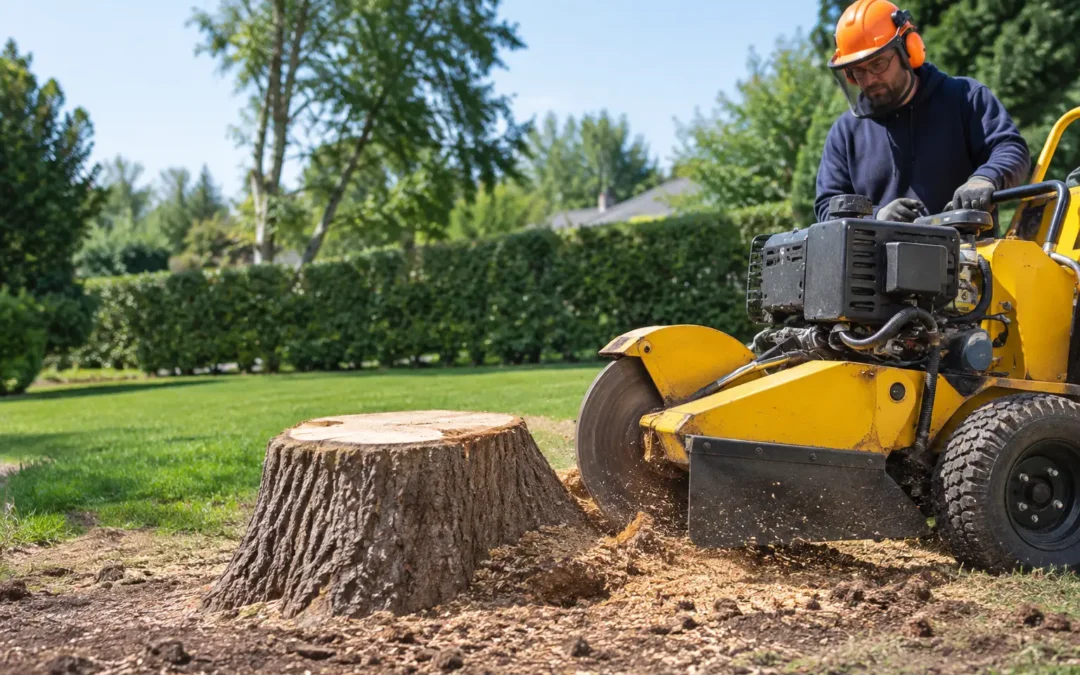
A retained stump can turn an otherwise well-maintained property into a recurring maintenance problem. This property manager guide to stump removal explains how to assess the risk, plan the work, and restore the area without creating surprises for tenants, contractors, or your operating budget.
A stump may look harmless from a distance, especially when grass has grown around it. Up close, it can damage mower blades, create a trip hazard, attract insects, harbor decay, and take up space that should be usable lawn, parking-lot landscaping, or a future planting bed. For managers responsible for multiple sites, leaving stumps in place often means accepting a small but persistent liability.
Start with the property risk, not the stump size
The widest stump is not always the highest priority. A small stump near a sidewalk, playground, tenant walkway, loading area, or regular mowing route may deserve faster attention than a larger one at the back of an unused lot. Consider how often people, maintenance crews, and equipment move through the area.
Walk the site and look at the condition around the stump. Is it hidden by tall grass or snow? Has the root system lifted turf, edging, or pavement? Are suckers growing around the old tree location? Is there visible fungal decay or insect activity? These details help determine whether the issue is primarily about safety, maintenance, appearance, or site preparation.
Seasonal conditions matter in northern climates. A stump that is easy to spot in summer can become buried under snow and create a hazard for snow removal crews, pedestrians, and anyone crossing the lawn. In spring, soft ground and standing water can also reveal drainage problems around old root systems. Recording the location and condition during routine site inspections makes it easier to schedule work before a complaint or incident forces the decision.
Understand what professional stump removal involves
Property managers often use stump removal as a catch-all term. In many cases, the practical solution is stump grinding rather than pulling the entire root ball out of the ground. Full excavation can leave a much larger hole, disturb surrounding soil, damage nearby landscaping, and require more restoration work.
A professional grinder uses a cutting wheel fitted with carbide-tipped teeth to break down the visible stump and root plate into woodchips. The goal is to grind below grade so the area can be covered, leveled, reseeded, mulched, or prepared for another project. At Stump Chomper, crews grind stumps and root plates to at least 10 inches below ground level when site conditions allow.
That depth is useful because it removes the hard material that interferes with mowing and landscaping. It does not mean every root across the property disappears. Larger tree roots can extend well beyond the stump, and the right treatment depends on where those roots are located and what the property owner plans to do next. If construction, a fence installation, or a new tree is planned nearby, discuss that use before the work is scheduled.
Plan the work around access and site operations
Grinding is efficient, but access determines how smoothly a job goes. Before requesting an estimate, identify gates, narrow side yards, grade changes, parked vehicles, irrigation components, utility boxes, retaining walls, and nearby structures. A site that is easy to reach with equipment generally takes less time and requires less manual handling.
It also helps to choose a work window that limits disruption. For an apartment complex, that might mean scheduling away from peak tenant traffic and arranging temporary access around the work zone. At a retail or office property, it may mean early-day work before landscaping crews, deliveries, or customer traffic increase. Clear communication with tenants and on-site staff prevents the most common issues: blocked access, vehicles parked too close, or people walking into an active work area.
Underground utilities deserve special attention. A stump grinder works below the soil surface, so utility locations must be addressed before grinding begins. Do not assume an old tree area is clear simply because the tree was removed years ago. Irrigation lines, landscape lighting, private utility runs, and other site features may not be obvious from above ground.
A qualified stump specialist should also evaluate nearby assets. Grinding close to foundations, fences, concrete, decorative stone, or mature plantings requires a careful approach. Sometimes the best outcome is full grinding; other times, limited access or a sensitive landscape feature may change the scope. The right contractor explains those trade-offs before work starts rather than treating every stump as identical.
Decide what happens to the woodchips and the hole
Grinding produces woodchips, and property managers should decide in advance whether those chips will remain on site. They can be useful as mulch in suitable landscape beds, but they are not always the right material for filling the finished area. Fresh woodchips settle over time and can temporarily tie up nitrogen near the soil surface, which is not ideal if the immediate goal is establishing new grass.
For a lawn restoration, the usual approach is to remove or redistribute excess grindings, add suitable topsoil as needed, level the area, and seed or sod it according to the landscape plan. The amount of soil needed depends on stump size, grinding depth, and how much material is left behind. A large stump can produce a surprisingly large volume of chips.
If the area will become a mulched bed, the restoration can be simpler. The ground still needs to be leveled so water does not collect over the old stump location, but woodchips may be integrated into the bed where appropriate. For construction projects, ask the project contractor what subgrade condition is needed. Grinding is often the least disruptive first step, but it may not replace excavation where footings, paving, or utility trenches are planned.
Budget for scope, not just the number of stumps
A reliable estimate should reflect more than stump diameter. Size matters, but access, wood hardness, the extent of the root flare, proximity to obstacles, cleanup expectations, and the number of locations all affect the work. Several accessible stumps at one property may be more cost-effective to handle in one visit than separate callouts over several months.
Ask for upfront pricing and clarity about what is included. Confirm the grinding depth, whether surface roots are included, how woodchips will be handled, and whether final soil, seed, sod, or mulch installation is part of the quoted scope. Stump grinding and landscape restoration are related tasks, but they are not always the same service.
Avoid choosing solely on the lowest figure. An incomplete job can leave raised roots, shallow grinding, a poorly cleaned site, or a depression that becomes a drainage issue after the first heavy rain. The value of professional work is not just the stump disappearing. It is the property being left in a condition that supports the next use of the space.
Build stump management into routine grounds planning
For a single property, stump removal may be a one-time repair. For a portfolio, it is more useful to treat it as part of routine grounds management. Keep a simple record of stump locations, tree-removal dates, priority level, access notes, and intended restoration. That record helps when ownership changes, maintenance teams shift, or capital work is scheduled later.
Consider grouping stump work with other seasonal site tasks. After tree removal is often the best time to assess whether the area should be ground, reseeded, regraded, or converted into a bed. Waiting is sometimes reasonable if a larger landscaping project is already planned, but delaying without a plan leaves the maintenance burden in place.
A clean, level site sends a quiet message that the property is cared for. When the stump is gone, the ground is safe to maintain, and the restoration matches the property’s purpose, tenants and visitors may never think about the work that happened there. That is usually the best result: fewer hazards, fewer recurring maintenance problems, and outdoor space ready for what comes next.