
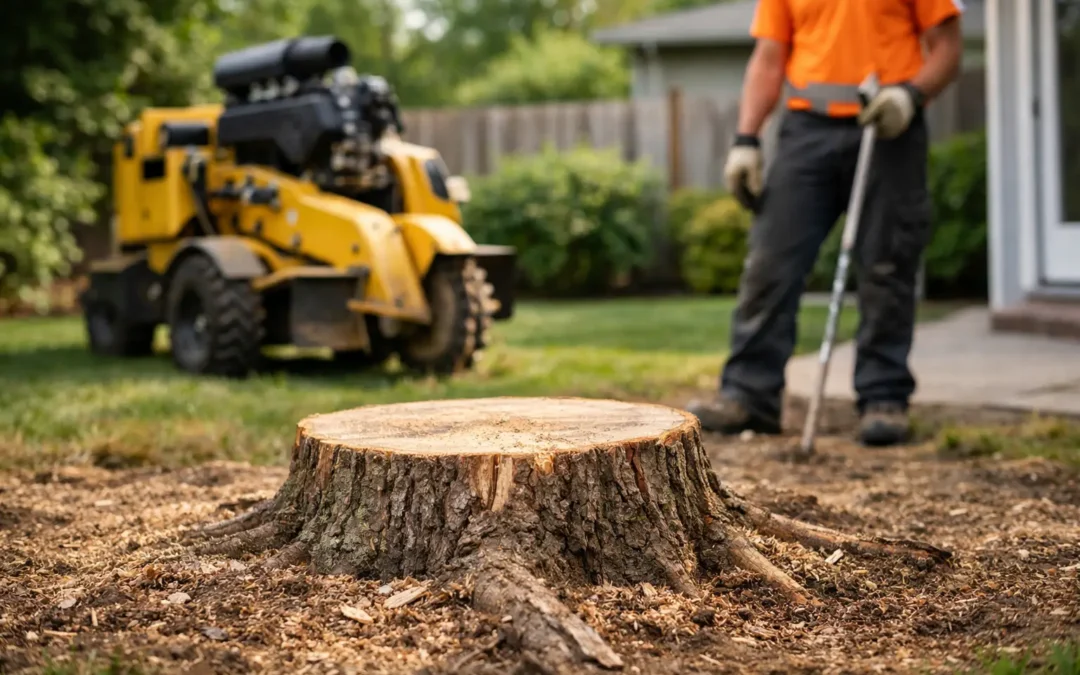
A stump can be only a few feet from the house and still be difficult to grind. The issue is not just the stump’s size. Stump access requirements determine whether the grinding equipment can safely reach it, where the crew can work, and how well surrounding lawn, fences, gardens, and structures can be protected.
For Edmonton-area homeowners, acreage owners, and commercial property managers, a quick look at access before booking helps prevent surprises on service day. A clear route lets the operator bring in the right machine, grind the stump below grade, and leave the area ready for the next stage of your project.
What Stump Access Requirements Mean
Access means the complete path from the street, driveway, alley, or parking area to the stump. A stump grinder is specialized gas-powered equipment, not a tool that can be carried through every narrow opening or over every landscape feature. It needs enough room to travel, turn, and operate safely around the stump.
The route matters as much as the final work area. A wide backyard gate is helpful, but it does not solve the problem if the route to that gate is blocked by a parked vehicle, a steep set of steps, a tight side yard, or a soft lawn after heavy rain.
Access also includes overhead and underground conditions. Low branches, utility lines, irrigation components, hidden edging, and landscape lighting can all affect where equipment travels and where woodchips are discharged. A professional crew assesses those conditions before beginning work rather than forcing machinery into a space that could damage your property.
Start With the Route to the Stump
Walk the likely route before requesting an estimate. Consider where the crew will park and whether equipment can move from that location to the stump without crossing obstacles. Driveways, side yards, rear gates, alley access, and open commercial grounds can all work well, depending on the layout.
Gate width is often the first concern. Measure the narrowest point of the route, not just the opening itself. Gate posts, hinges, air-conditioning units, hose reels, retaining walls, and decorative planters can reduce usable space. If a gate can be opened farther or a removable fence panel is available, mention that during the estimate process.
Stairs are another common limitation. Stump grinders are designed to work on the ground, not to be pushed up or down residential stairways. A stump located behind a raised deck with stair-only access may require a different approach, additional preparation, or may not be practical to grind with standard equipment. It depends on the site, the stump, and the safe access available.
Slope and ground conditions deserve the same attention. Firm, relatively level ground gives equipment the best footing. Steep grades, muddy lawns, loose gravel, and icy surfaces can make travel less safe and may increase the chance of turf disturbance. If the site has been saturated by rain or thaw, it may be wiser to schedule when the ground is firmer.
Give the Grinder Room to Work
Once equipment reaches the stump, the operator needs a clear area around it. Grinding involves a cutting wheel fitted with carbide-tipped teeth that breaks down the stump and root plate into woodchips. The machine needs room to be positioned properly, and the operator needs a safe standing and working zone.
Move patio furniture, toys, garden tools, movable planters, and vehicles away from the work area. Keep pets and children indoors or well away from the site while grinding is underway. Woodchips and small pieces of debris are contained as much as possible, but stump grinding is active equipment work and a clear perimeter is the safest choice.
Tell the crew about nearby features that cannot be moved. This may include a shed, fence, deck, foundation, utility pedestal, sprinkler head, buried dog fence, drainage line, or newly planted shrub. A crew can work carefully around known obstacles. Damage is more likely when a feature is hidden beneath grass, mulch, snow, or accumulated debris.
In tight spaces, a smaller grinder may fit where larger equipment cannot. The trade-off is that machine size, stump diameter, root spread, and site conditions can affect production time and pricing. A clear photo showing the stump and the access route helps establish realistic expectations before the job is scheduled.
Prepare Utilities and Hidden Obstacles
Before grinding begins, identify any underground utilities or private lines near the stump. Public utility locates are essential where applicable, but they do not always identify privately installed items such as landscape wiring, irrigation systems, gas lines to a fire pit, or electrical lines running to a shed.
Do not assume a stump’s location is clear simply because the tree has been removed. Tree roots may run beside buried services, and old properties can contain forgotten lines, concrete, metal posts, rocks, or construction debris near the original tree. Hitting those materials can damage grinding teeth, delay the job, and create a safety risk.
Mark known sprinkler heads, shallow lines, landscape lights, and other private features clearly. If you are unsure what is below ground, say so. Honest information is more useful than a guess. A qualified operator can review the area and explain what can be done safely.
Overhead clearance matters, too. Low branches may interfere with equipment movement, while structures and fences can limit how the machine is positioned. If branches can be safely trimmed before the appointment, that may improve access. Do not attempt difficult pruning near power lines yourself.
Make Service Day Easier on Your Property
A little preparation allows the crew to focus on the stump rather than moving obstacles. Clear the driveway or designated parking location, unlock gates, secure pets, and make sure the operator can reach the work area without waiting for access. For commercial sites, notify staff, tenants, or customers when the work zone affects parking or pedestrian routes.
If a vehicle must remain nearby, discuss it before work begins. Grinding can create woodchips, and crews need a safe buffer around the equipment. The same applies to windows, outdoor furniture, and delicate garden beds. Property-conscious planning protects the areas you want to keep looking their best.
Ask where the woodchips will go. Grinding converts the stump into a pile of reusable organic material, and many property owners choose to keep chips for mulch or natural pathways. Others prefer that the material be spread neatly, removed, or managed as part of cleanup. The best option depends on your landscaping plans and the amount of material produced.
After grinding, the stump area is typically reduced below ground level so it can be covered with soil, reseeded, mulched, landscaped, or prepared for another use. Remaining roots will gradually break down underground. If you plan to build, install a hardscape feature, or plant a new tree close to the old location, explain that goal before the work starts. Those plans can affect the desired grinding area and depth.
When Access Is Limited
Limited access does not automatically mean a stump cannot be removed. It means the estimate needs to account for the real conditions. Side-yard stumps behind fences, stumps near garages, and stumps in landscaped backyards are routine situations when there is a workable route and sufficient operating space.
The right answer may be to temporarily remove a fence panel, relocate a planter, wait for better ground conditions, or select equipment suited to a confined area. In other cases, nearby structures or buried services may limit how far the operator can grind around a root flare. A straightforward site assessment gives you a better answer than assuming every stump can be treated exactly the same way.
Stump Chomper provides free, honest, no-obligation estimates because access, stump size, root spread, and site conditions all matter. Clear photos and a brief description of your gate, slope, and nearby obstacles can help start that conversation.
A clear path to the stump is one of the simplest ways to protect your property, keep the job moving, and get the clean below-grade result you need for the space you plan to use next.