
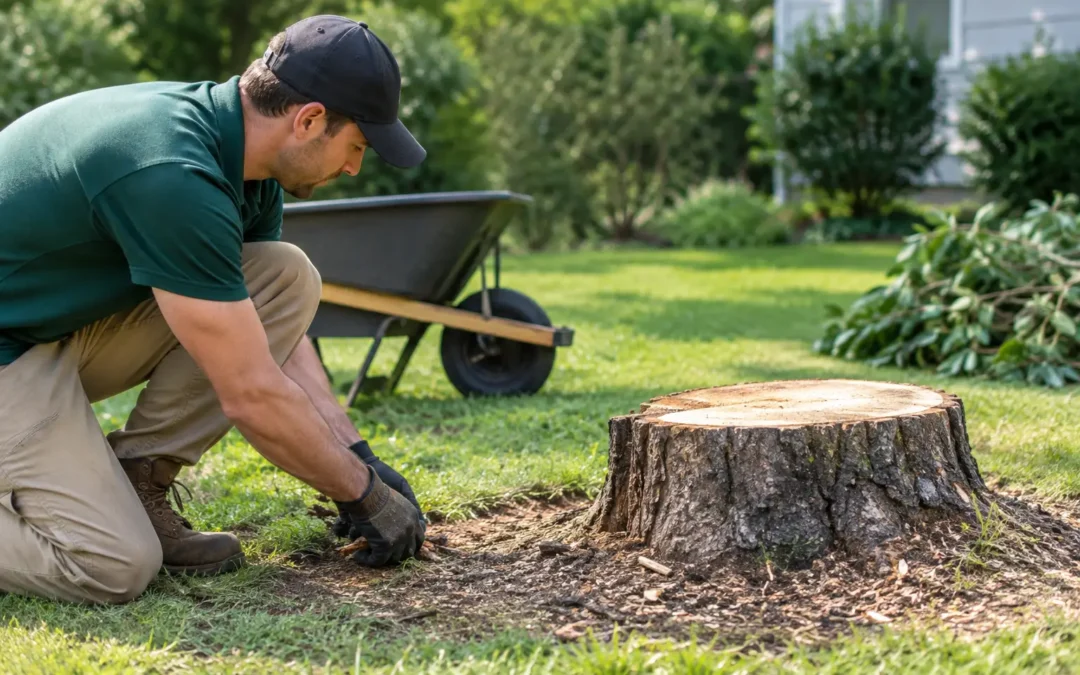
A stump grinder can turn an old stump into usable woodchips in a short visit, but the work starts before the machine reaches the stump. Knowing how to prepare yard for stump grinding helps protect your lawn, prevents avoidable delays, and gives the operator a clear, safe path to do the job properly.
Professional grinding equipment is heavy and powerful. Its carbide-tipped teeth break down the stump and root plate below ground level, often to about 10 inches beneath the surface. That depth makes the area more practical for reseeding, mulching, landscaping, or future construction. A little preparation lets the crew focus on that work instead of moving obstacles or trying to guess where hidden hazards may be.
How to Prepare Your Yard for Stump Grinding
The main goal is simple: make the stump visible, make access safe, and make sure the operator knows about anything underground or nearby that could be affected. You do not need to perform any hazardous work yourself. Leave cutting, digging around roots, and operating equipment to the professionals.
Start by looking at the route from the street, driveway, alley, or access point to the stump. A grinder needs enough room to travel without clipping fences, garden features, vehicles, or low-hanging branches. If your property has a narrow side yard, a locked gate, soft ground, or a steep slope, mention it when requesting an estimate. Those details help determine the right equipment and the best approach before the crew arrives.
Clear the Immediate Work Area
Remove movable items around the stump before the appointment. Patio furniture, planters, children’s toys, hoses, lawn ornaments, portable fire pits, and garden tools should be moved well outside the work zone. Grinding produces woodchips and can throw small pieces of debris, so give the operator room to work without worrying about damaging belongings.
It is also helpful to clear loose branches, rocks, old landscaping timbers, and piles of leaves from around the stump. Rocks are especially hard on grinding teeth and can become projectiles if struck. Do not try to expose every root yourself. The crew can assess the root flare and work safely from there, but a clean area around the stump makes that assessment much easier.
If the stump is hidden by tall grass, weeds, or brush, mow or trim the growth if you can do so safely. Marking the stump location is useful when it is difficult to see, particularly on acreages or commercial grounds with several stumps. A bright flag or stake placed nearby works well. Keep the marker off the stump itself so it does not interfere with the grinder.
Provide a Clear Access Route
Access is one of the biggest factors in an efficient stump grinding job. Move vehicles from the driveway or parking area if that is where the crew will enter. Open gates and make sure pets are secured indoors or in a separate part of the property. A curious dog, even a friendly one, should not be near active grinding equipment.
Check gate widths if the stump is behind a fence. Let the service provider know about tight corners, steps, retaining walls, narrow walkways, or overhead branches. A grinder cannot safely be lifted over a fence or forced through an opening that is too small. In some cases, a section of fence may need to be temporarily removed, but that depends on access and should be discussed ahead of time rather than decided on the day of service.
Wet conditions deserve special attention. Edmonton-area spring thaw, heavy rain, or an irrigated lawn can leave ground soft enough for equipment to make ruts. Grinding can still be possible, but timing and access may need to change to protect the property. If your lawn is saturated, tell the crew before they arrive. Waiting for firmer conditions can be the better choice when lawn damage would create a larger repair project.
Identify Underground Utilities and Site Hazards
Never assume a stump is clear simply because it is in the middle of a lawn. Buried utility lines, irrigation pipes, landscape lighting wires, septic components, and private gas lines can run through areas that look ordinary from above.
Before grinding is scheduled, arrange for utility locates where required and provide any information you have about private lines or systems. Public utility marking does not always cover privately installed electrical wiring to a shed, irrigation lines, invisible dog fences, or landscape drainage. If you installed it, inherited it with the property, or suspect it may be there, point it out.
Let the operator know if the stump is close to a foundation, deck, shed, fence post, retaining wall, utility box, or paved surface. Stump grinding can often be completed near structures, but nearby materials affect how the work is planned. The operator may adjust the grinding area, depth, or machine position to avoid damage.
This is also the time to mention bees, wasps, ants, or signs of animal activity around the stump. Old stumps and decaying root systems can shelter insects and small animals. If there is an active nest, it may need to be addressed before grinding begins. The same applies to visibly rotten trees or unstable wood left near the stump. Keeping the crew informed supports a safe job site for everyone.
Protect What You Want to Keep
Most homeowners want the stump gone without losing the garden bed, sprinkler system, or lawn they have worked hard to maintain. A few simple steps can make that easier.
Move containers and decorations away from the work area, and tie back flexible shrubs or branches that could hang into the grinder’s path. If a stump sits beside a garden bed, identify plants you want protected. The crew can see the bed edge more clearly when it is marked, but avoid placing delicate materials directly beside the stump where flying woodchips may cover them.
Woodchips are a normal result of grinding. They can be useful as mulch in suitable areas, but they may not be the finished look you want in the middle of a lawn. Decide ahead of time whether you would like chips left for reuse, spread in a designated area, or removed as part of the cleanup plan. The best option depends on your landscaping goals and the amount of material produced.
If you plan to reseed, remember that the ground over a former stump often settles as buried roots decay. Grinding below grade removes the visible stump and makes the site usable, but it does not instantly remove every root across the yard. Adding topsoil and reseeding is often the practical next step. For a new tree, choose a spot away from the old stump location rather than planting directly over the remaining root system.
Prepare for the Day of Service
On the appointment day, keep gates unlocked or arrange access with the crew. Ensure the stump is visible and that any utility markings remain in place. If you will not be home, confirm the access plan, payment arrangements, and instructions for woodchips before the work begins.
Keep children and pets away from the work area until the machine is shut down and the operator confirms the site is safe. Grinding is not a spectator activity. The equipment is designed for tough wood, and the operator needs full attention while managing debris, changing positions, and working around roots.
After the stump is ground, inspect the site with the crew if possible. Ask where the grinding ends, how deep the work was completed, and what the best next step is for your plans. A clean site may be ready for soil, seed, mulch, sod, or a landscaping project, but the right finish depends on how you intend to use that space.
A Better Result Starts With Clear Communication
The best preparation is often a short, honest conversation before the appointment. Share photos when requesting an estimate, describe access limitations, and mention underground systems or nearby structures. That allows a specialist to arrive prepared with the appropriate equipment rather than discovering complications after the job has started.
At Stump Chomper, the goal is to leave your property safer, cleaner, and ready for what comes next. Clear access, visible hazards, and a plan for the woodchips help make that possible. Once the stump is gone, that awkward patch of yard can finally become lawn, garden space, a safer walking area, or room for the project you have been putting off.