
A stump can look like a small leftover from a tree removal, but the work around it often affects the rest of your property plans. Whether you are preparing a lawn for reseeding, making room for a garden bed, repairing a fence line, or clearing a commercial site, understanding the stump grinding timeframe helps you schedule the job without unpleasant surprises.
For most accessible residential stumps, the actual grinding can take far less time than property owners expect. The full appointment, however, also includes setup, safety checks, managing the woodchips, and cleanup. Size, wood type, root flare, access, and nearby obstacles all matter. A professional estimate is the best way to get a realistic schedule for your particular site.
How Long Does Stump Grinding Take?
A small, open-access stump may be ground in as little as 15 to 30 minutes. A medium stump commonly takes 30 minutes to an hour, while large, old, or unusually broad stumps can take several hours. That is only a general working range, not a promise for every tree species or property.
The visible stump is not the whole job. Many trees have a wide root plate at ground level, and that flare can be much larger than the trunk itself. A grinder must work across that area methodically to reduce the wood below grade. At Stump Chomper, specialist gas-powered equipment with carbide-tipped teeth grinds stumps and root plates to at least 10 inches below ground level where site conditions allow.
That depth gives you a more useful finished area than simply shaving the stump flush with the lawn. It helps prevent the remaining wood from interfering with mowing, landscaping, or future surface work. It also means the operator has more material to process than a quick surface-level cut would require.
What Affects the Stump Grinding Timeframe?
The diameter of the stump is usually the biggest factor. A 10-inch stump and a 36-inch stump require very different amounts of grinding, even when they come from similar types of trees. Diameter should be measured at the widest point near the ground, including the root flare, rather than only across the cut top.
Wood density also changes the pace. Softer wood often breaks down more quickly, while dense hardwood can require more passes from the carbide-tipped teeth. Old stumps are not always faster to grind. Some have started to decay, but others remain solid beneath a weathered outer layer. Frozen ground and wood can also affect winter scheduling and production time in the Edmonton area.
Access is equally important. Grinding equipment needs a safe route from the curb, driveway, or gate to the stump. A wide, level path makes for a more efficient visit. Narrow gates, stairs, steep slopes, soft ground, retaining walls, and tight backyard corners may limit the equipment that can be used or require extra preparation.
The area around the stump matters, too. Operators need room to work safely around irrigation components, landscape lighting, edging, decks, fences, utility boxes, rocks, and nearby plants. A stump close to a structure is not necessarily a problem, but careful positioning takes time. Clear information and photos during the estimate process help identify these conditions before the crew arrives.
Finally, the number of stumps can affect the overall schedule in both directions. Several small stumps in one open area may be completed efficiently during a single visit. Multiple stumps spread across a large acreage, behind separate barriers, or mixed with difficult access points require more travel and setup within the property.
The Work Happens in Stages
A professional grinding appointment is more than switching on a machine. First, the crew confirms access and examines the immediate work zone. People, pets, vehicles, and breakable items should be kept clear. Nearby stones, metal, wire, or hidden debris can damage equipment or create a safety risk when contacted by the grinder.
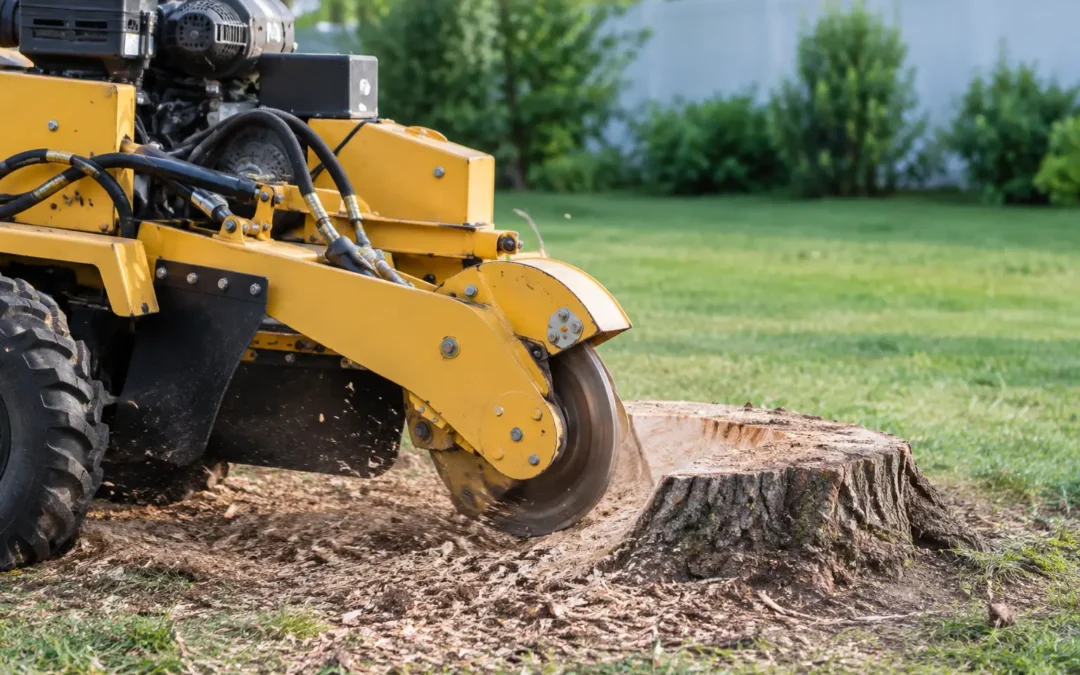
Next comes the grinding itself. The machine’s rotating wheel uses carbide-tipped teeth to chip away the stump in controlled passes. The operator works the stump down progressively, then addresses the root flare so the area is reduced below the surrounding grade. This process produces a mixture of woodchips and soil rather than large chunks of timber.
Afterward, the crew manages the grindings according to the agreed scope of work and tidies the work area. Woodchips can be useful as mulch in suitable areas, but they should not be treated as finished topsoil. If you plan to grow grass or install a garden, the remaining chips may need to be removed, spread elsewhere, or supplemented with clean soil. The final cleanup is part of why an appointment can take longer than the active grinding time alone.
When Can You Use the Area Again?
In many cases, you can begin planning the space as soon as the work is complete. The exact next step depends on what you want the area to become. For lawn repair, remove or redistribute excess woodchips, add quality topsoil as needed, level the site, and seed or lay sod during an appropriate growing period. The ground may settle slightly over time as small remaining roots decompose, so leaving room for a light top-up is sensible.
For a mulch bed, the woodchip material may be useful if it suits your landscape design. Keep fresh chips away from the base of living plants and do not pile them against structures. For paving, sheds, fencing, or construction, tell the grinding provider about your plans beforehand. A project needing a compacted base or deeper excavation may call for additional site preparation beyond stump grinding.
Planting a new tree in the exact location of the old stump is usually not the best approach. Even after grinding, old roots, wood residue, and altered soil conditions remain below ground. Moving the new tree several feet away, where it has fresh soil and room for new roots, gives it a better start.
How to Help Keep the Appointment on Schedule
A little preparation protects your property and helps the crew begin work promptly. Before the appointment, make sure gates are unlocked and remove movable items from the route to the stump. Park vehicles away from the work zone. Keep children and pets indoors or well away from the area while equipment is operating.
If you know of irrigation lines, private utility lines, landscape wiring, or other buried features near the stump, point them out before work begins. Do not assume every line is obvious from the surface. Likewise, let the crew know if the yard has soft spots, septic components, recently installed landscaping, or limited access through a neighbor’s property.
Weather may occasionally change the schedule. Light rain does not always stop stump grinding, but saturated ground can make access unsafe or damage a lawn. Heavy snow, extreme cold, high winds, or poor visibility may also require a change of plans. Rescheduling in those circumstances is about protecting the crew, equipment, and your property.
Why a Clear Estimate Matters
A fair stump grinding estimate should account for the details that influence labor and equipment time, not just the number of stumps. Clear photos, stump measurements, access details, and your plans for the woodchips all help create an accurate scope. Upfront pricing is especially valuable when a stump has a hidden root flare or sits in a confined area where additional care is needed.
For homeowners, landlords, acreage owners, and commercial property managers, the practical goal is simple: remove the trip hazard and unusable obstacle without creating a mess or delaying the next phase of work. An experienced crew can explain what will be ground, how deep the work will go, what will remain on site, and how long the visit is likely to take.
If your stump is holding up a landscaping or maintenance project, arrange an estimate before other crews are booked. That gives you time to confirm access, decide what to do with the woodchips, and turn an inconvenient patch of old tree growth into ground you can use again.