
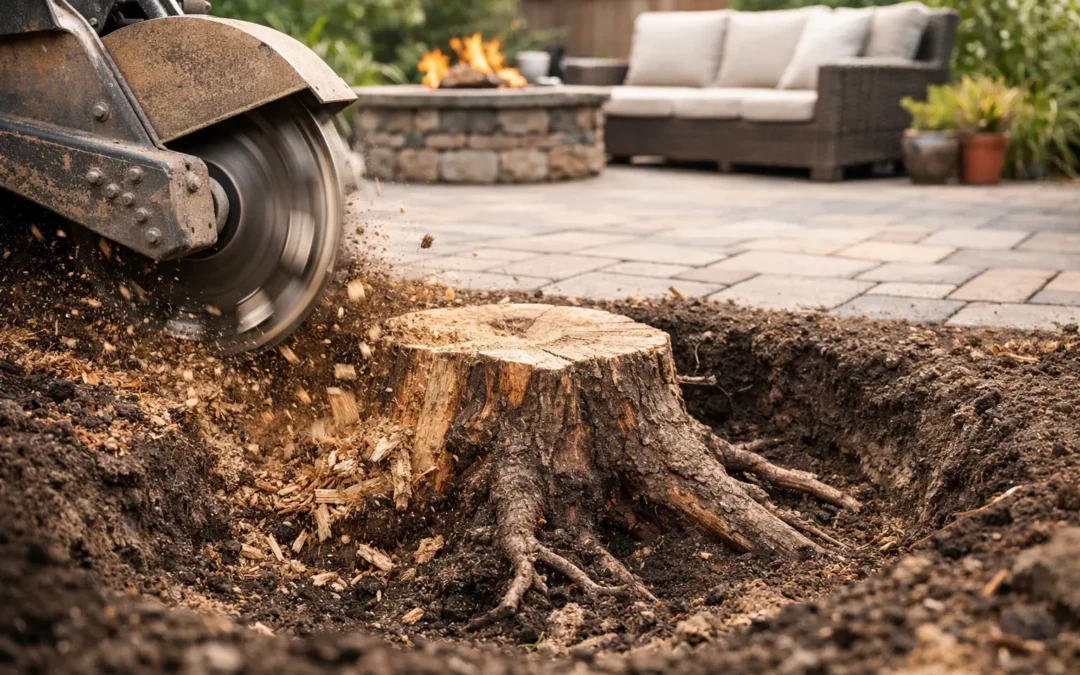
A new patio can turn an awkward corner of the yard into the place where people gather. But if a tree stump sits within the planned footprint – or close enough for its roots to affect excavation – it needs attention before base material, pavers, or concrete go in. Stump removal for patio construction is not a finishing task. It is site preparation that helps protect the stability, appearance, and usable life of the finished surface.
A stump left beneath or beside a patio may seem harmless once it is out of sight. In reality, wood continues to break down, soil can settle, and remaining roots can complicate digging and grading. Addressing the stump first gives your patio contractor a cleaner, more predictable area to build on.
Why Stump Removal for Patio Work Comes First
Patios depend on a properly prepared base. Whether you are installing concrete, paving stones, or a compacted gravel surface, the ground below must be excavated to the correct depth, graded for drainage, and compacted in layers. A stump and root plate interrupt that process.
The biggest concern is future settling. As buried wood decays, it loses volume. If a patio is built over a stump or substantial woody roots, the material below can eventually create a soft spot or void. Pavers may shift, joints can open, and a concrete slab may crack or sink. Repairs are far more disruptive once the patio is complete.
There is also the practical issue of access. Patio excavation equipment, plate compactors, and crews work more efficiently when they are not fighting through a hard stump or tangled roots. Removing the obstruction before construction helps the project stay on grade and reduces unwelcome surprises after work begins.
What Professional Stump Grinding Does
For most patio projects, grinding is the practical way to deal with the visible stump. A professional stump grinder uses a cutting wheel fitted with carbide-tipped teeth to chip away the stump and upper root plate. The wood is reduced to chips rather than pulled from the ground with heavy excavation equipment.
At Stump Chomper, stumps are typically ground at least 10 inches below ground level. That below-grade depth is valuable because it removes the solid wood that would interfere with ordinary lawn restoration, landscaping, and many patio preparation plans. The resulting woodchips can be left for reuse where appropriate or managed as part of site cleanup.
Grinding is different from digging out every root across the yard. Roots can extend well beyond the stump, particularly from mature trees. In many cases, there is no need to chase every small root. What matters is removing the stump and any major woody material that conflicts with the patio footprint, excavation depth, edging, drainage route, or nearby utility work.
The right scope depends on the patio design. A shallow seating area built beyond the old stump location may only need standard below-grade grinding. A large patio directly over the former tree location, especially one requiring deeper excavation, may need additional root management and fresh compacted fill. Discussing the planned patio size and location before grinding helps the crew prepare the area appropriately.
Plan the Work Around the Patio Footprint
Before booking stump service, mark or describe the proposed patio area as clearly as possible. A simple sketch, flags, paint marks, or measurements from the house can help identify whether the stump sits inside the build zone or along an edge. This information allows the stump-grinding crew to focus on the material that could affect the installation.
It also helps to know what kind of patio you are building. Paver patios generally require excavation for a compacted granular base, bedding layer, and the pavers themselves. Concrete patios require a prepared subbase and room for the slab. Both need positive drainage so water moves away from the home rather than collecting below the surface.
If the old tree stood near a foundation, fence, retaining wall, shed, or underground service, that context matters too. An experienced operator can assess access and work carefully around the surrounding property. The goal is not simply to make the stump disappear. It is to leave a workable area for the next stage of the project.
Do Not Treat Woodchips as Patio Base Material
Stump grinding produces useful organic material, but woodchips are not a structural base for a patio. They compress and decompose over time, which makes them unsuitable beneath pavers, concrete, or compacted gravel surfaces.
If the ground-out area falls inside the patio footprint, the chips should be removed or kept out of the excavation zone. The patio installer can then replace that area with suitable granular material and compact it properly. Woodchips are better used as mulch around trees and planting beds, provided they are not piled against building siding or mixed into the patio base.
Allow for Soil Settlement and Final Grading
Even after a stump is ground below grade, the area may need time and attention before the final patio build. A large stump produces a significant amount of chips, and the surrounding soil can be disturbed during the process. Once chips are cleared from the construction area, the site may need soil added, leveled, and compacted to meet the patio contractor’s specifications.
This is especially relevant with older, larger stumps. The broader the root plate, the more likely there will be uneven soil or decaying roots beyond the immediate grinding area. That does not mean a patio cannot be installed there. It means the base preparation should be deliberate rather than rushed.
Common Mistakes That Create Patio Problems
One common mistake is cutting a stump flush with the lawn and assuming the patio crew can work around it. A flush-cut stump still occupies the ground below and can damage tools, slow excavation, and undermine the patio later.
Another is waiting until the patio materials are delivered. A stump grinder needs safe access and working room. Completing stump work before pavers, gravel piles, forms, or landscaping features arrive keeps the work area open and avoids unnecessary handling of materials.
Property owners also sometimes assume a stump near the patio does not matter because it is outside the visible surface. That depends on its distance from the excavation, the size of the root system, and whether the patio edge, drainage swale, or retaining feature will cross the old root zone. A quick site assessment is better than guessing.
Finally, avoid trying to burn, chemically rot, or manually excavate a stump as a patio-prep solution. These approaches can take a long time, leave unstable material in place, and create safety concerns. Heavy manual digging around mature roots is demanding work, and improvised methods rarely produce a clean construction-ready result.
A Cleaner Starting Point for Outdoor Living
A professionally ground stump gives you back more than square footage. It removes a trip hazard, makes mowing easier until construction starts, and clears an obstacle from the part of the yard you want to improve. For landlords and commercial property managers, it can also help keep a planned outdoor area safer and easier to maintain.
The best time to arrange stump grinding is before final patio measurements and before excavation begins. With a free, honest, and no-obligation estimate, you can confirm access, discuss the required grinding depth, and make sure the site is ready for the patio contractor’s next steps.
A patio should rest on a base built to last, not on wood that is slowly disappearing underground. Clear the stump first, prepare the ground properly, and give your new outdoor space the solid start it deserves.