
A stump can look like a small leftover from a tree removal, but the work required to deal with it properly is rarely one-size-fits-all. Stump removal cost depends on what is below ground, where the stump sits, and what you need the area to become afterward. For Edmonton homeowners, acreage owners, and property managers, the best price is not simply the lowest number. It is a clear quote for safe grinding, proper depth, and a clean site that is ready for its next use.
What affects stump removal cost?
The main factor is stump size. A wide, mature stump has more wood and a larger root plate than a young ornamental tree. It takes more time and more passes with the grinder to reduce that material below grade. Diameter is usually measured at the widest point near ground level, so a flared stump can cost more than a narrow trunk might suggest.
Wood type also matters. Softwood stumps can often be ground more quickly than dense hardwood. Older stumps may be partly decayed, while freshly cut stumps can still be solid and wet. Neither condition automatically makes the job difficult, but each affects how the carbide-tipped teeth move through the wood and how long the crew needs to work.
Root spread is another practical consideration. The visible stump is only part of the job. Some trees leave substantial surface roots or root plates that interfere with mowing, landscaping, walkways, and construction. Grinding these areas adds time, but it can make the finished space far more useful.
Access can change the scope of the work
Professional stump grinders are powerful, purpose-built machines, but they still need a safe path to the stump. A front-yard stump beside a driveway is generally simpler to reach than one behind a narrow gate, across a steep slope, or through a landscaped backyard.
Access is not just about inconvenience. Crews need to protect fences, garden beds, irrigation lines, edging, sidewalks, and nearby structures while moving equipment into position. If a gate must be removed, obstacles need to be moved, or the stump is located on difficult terrain, those conditions may affect the quote.
Before booking, it helps to let the contractor know about narrow access points, locked gates, pets, underground services, recent landscaping, and any nearby features you want protected. A few accurate details can prevent surprises on service day.
Quantity and location matter too
Grinding several stumps during one visit can be more efficient than arranging separate appointments. The crew is already mobilized, the equipment is already on site, and the work can be planned as one project. This does not mean every stump receives the same price, but grouped work may offer better overall value than tackling stumps one at a time.
Location also matters. Stumps close to foundations, utility boxes, retaining walls, sheds, decks, or buried lines require added care. A qualified operator assesses the working area rather than forcing equipment into a space where damage is possible. That careful approach protects the property, even if it means the job needs a different method or additional preparation.
What a stump removal quote should include
A useful estimate explains the scope of work in plain language. You should know whether the price includes grinding only, the depth of grinding, surface-root work, woodchip handling, and cleanup. If a contractor uses the word “removal,” ask what that means in practice.
Complete excavation of a stump and its entire root system is a different service from stump grinding. Excavation can involve larger equipment, major soil disturbance, and the need to haul away a heavy root ball. For most residential and commercial grounds, grinding is the more practical solution. It removes the visible obstruction and reduces the stump and root plate below ground without tearing up a large section of lawn.
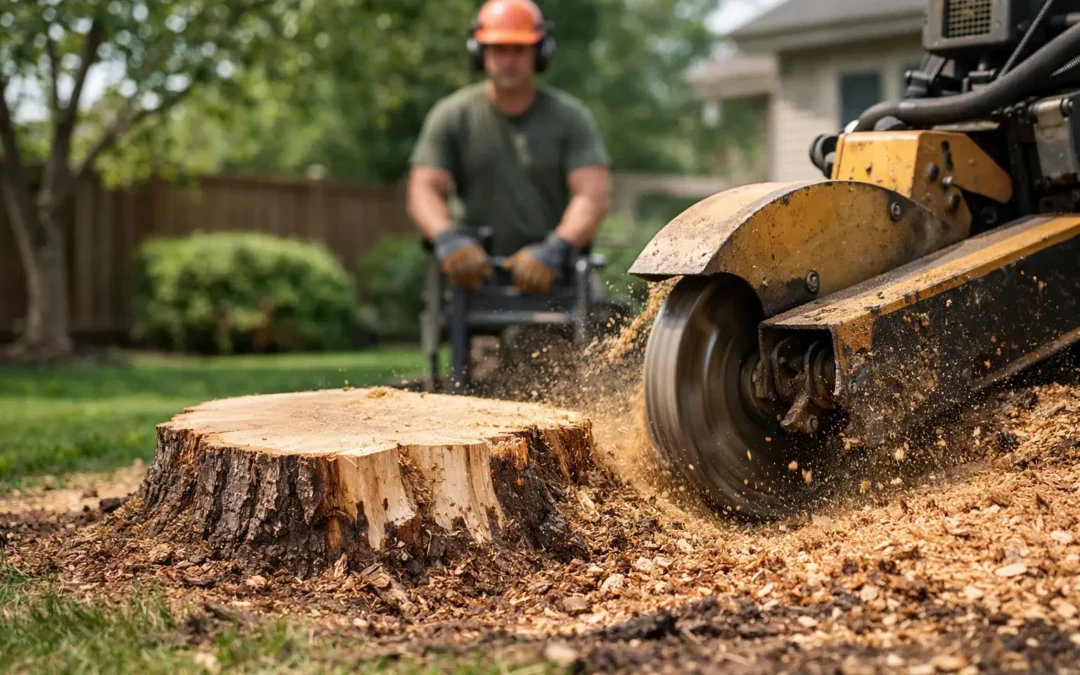
At Stump Chomper, professional grinding reduces stumps to at least 10 inches below ground level. The equipment uses gas-powered grinders with carbide-tipped teeth to turn the wood into chips. That depth helps create room for topsoil, sod, mulch, reseeding, or future landscaping, depending on the site and the property owner’s plans.
Upfront pricing matters because stump work has variables. A free, honest, no-obligation estimate gives you the chance to understand those variables before equipment arrives. It is far better to discuss access, stump dimensions, and cleanup in advance than to accept a vague starting price that changes after the job begins.
Why cheaper is not always lower cost
A low quote can be tempting when the stump seems minor. But an incomplete job may leave a hard wood core near the surface, exposed roots that catch mower blades, or a hole filled with chips and no plan for restoration. Those issues can create extra work later, especially if you are preparing for sod, a garden bed, a patio, or a new fence.
There is also a safety side to consider. Stumps are tripping hazards, particularly near walkways, play areas, rental properties, and commercial grounds. They can damage mowing equipment, attract insects, support fungal growth, and send up new suckers from the remaining root system. A professional service addresses the immediate eyesore and the ongoing maintenance problem.
Trying to remove a stump yourself can look less expensive at first, but rental equipment, transportation, fuel, safety gear, and time add up quickly. More importantly, stump grinders are specialized machines. They require an experienced operator who understands how to manage the cutting wheel, control debris, work around obstacles, and leave the site in good condition.
What happens to the woodchips?
Grinding produces woodchips mixed with some soil. Many property owners choose to keep this material for use around trees, shrubs, or naturalized areas. It can be useful as mulch once it is spread appropriately, although it is not a direct substitute for finished topsoil in a new lawn or garden bed.
If you want the area reseeded or sodded, the chips typically need to be raked back or removed and the depression filled with suitable soil. A stump grinding crew can explain the condition of the area after grinding and what will be needed before the next landscaping step. The right choice depends on whether you want a lawn, planting bed, hardscape feature, or construction-ready surface.
Can you plant a new tree in the same spot?
It is usually better to plant a replacement tree near the old location rather than directly in the same footprint. Even after deep grinding, old roots and wood remnants can remain below grade and decompose over time. That can cause settling and make it harder for a new tree to establish strong roots.
A nearby location with fresh soil gives the replacement tree a better start. If space is limited, discuss your planting plans before the stump is ground so the work can support the layout you have in mind.
How to get an accurate estimate
The most accurate stump removal cost comes from seeing the stump or receiving clear information about it. Measure the stump at ground level, estimate how many stumps need attention, and note whether there are surface roots. Photos are helpful when they show the stump, the access route, and nearby fences, gardens, buildings, or utilities.
Be clear about your end goal. A stump that only needs to stop damaging a mower may require a different finish than one sitting where you plan to install a shed or pour a walkway. Sharing that plan helps the crew recommend the right grinding depth and cleanup approach.
A well-ground stump gives you back more than a patch of lawn. It gives you safer footing, easier maintenance, and a piece of property you can use again. When you request an estimate, ask the questions that matter to your site, then choose a crew that treats your yard or commercial grounds with the same care you do.