
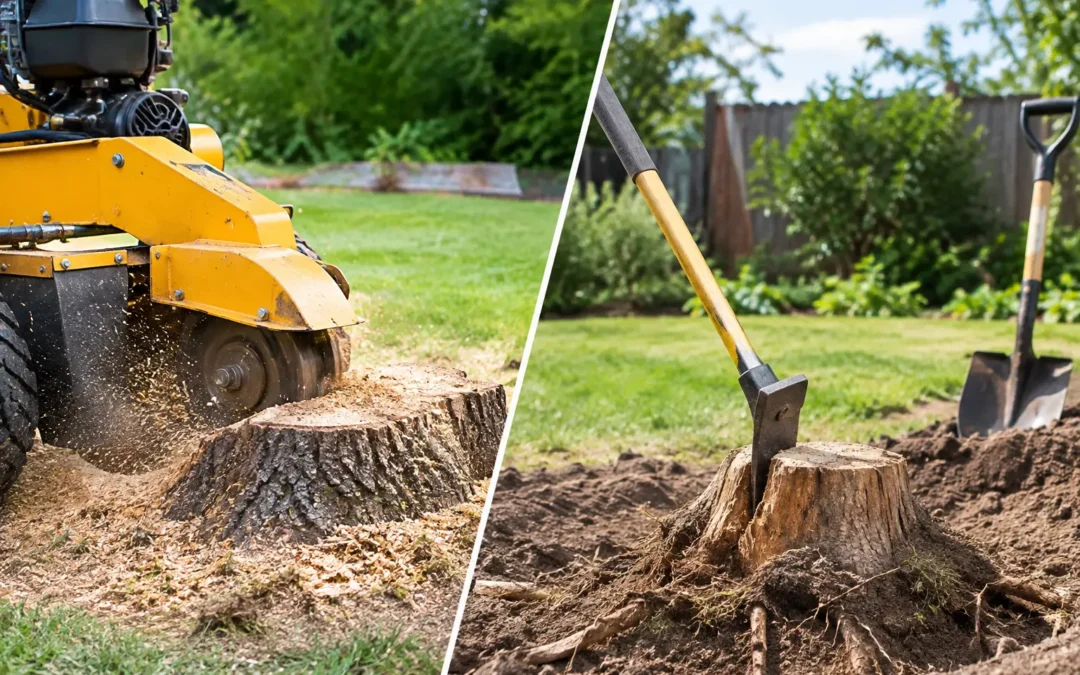
A stump can look harmless until someone catches a foot on it, a mower blade hits it, or new shoots begin pushing through the lawn. When weighing professional versus DIY stump removal, the real question is not simply whether you can get the stump out. It is whether the work leaves your property safer, usable, and ready for what comes next.
For many Edmonton-area property owners, a stump is left behind after a tree removal because it seems like a job for another day. That delay can lead to lost lawn space, insect activity, fungal decay, mower damage, and a persistent trip hazard. The best removal method depends on the stump’s size, location, root system, and your plans for the area.
Professional Versus DIY Stump Removal: What Changes?
DIY stump removal can mean several very different things. Some people dig around the stump and cut roots with hand tools. Others rent a stump grinder, apply a chemical product intended to speed decomposition, or try burning the stump where local conditions and rules allow.
Professional stump grinding is a more direct process. A trained operator uses a purpose-built gas-powered grinder with carbide-tipped teeth to break down the stump and root plate into woodchips. The goal is to grind below the surface – often at least 10 inches below grade – so the area can be filled, reseeded, mulched, landscaped, or prepared for construction.
The difference is not just speed. It is control. A specialist evaluates access, underground hazards, nearby structures, slope, and the size of the stump before starting. That planning matters when a stump sits close to a fence, patio, garden bed, utility line, or commercial walkway.
The DIY Route: When It May Make Sense
A DIY approach may be reasonable for a very small, shallow stump in an open part of the yard. If it is a softwood stump, has already decayed substantially, and you have time to work carefully, hand removal can be a low-cost option.
Chemical stump removers are another option for property owners who are not in a rush. These products do not make a stump disappear overnight. They are intended to help the wood break down over time, often months or longer depending on the species, moisture level, and size of the stump. The area remains unusable while that process takes place.
Hand digging is also more demanding than it first appears. Tree roots spread farther than most people expect, and larger roots can be difficult to cut without the right tools. Pulling on roots with a vehicle or improvised rigging can damage lawns, irrigation lines, fences, or equipment. It can also create a serious injury risk if a chain, strap, or root fails under tension.
Renting a grinder can seem like the middle ground, but rental equipment still requires preparation and experience. The machine is powerful, heavy, and designed to remove hard wood with fast-moving cutting teeth. Operators need to keep people, pets, vehicles, and windows clear of the work area while managing flying chips, uneven ground, and the machine’s movement.
A rental may work well for someone who has operated similar equipment and has several accessible stumps to complete in one day. For one difficult stump, the rental fee, fuel, transport, safety gear, and time can narrow the savings quickly.
The Hidden Costs of Doing It Yourself
The visible cost of DIY removal is usually tools or a rental. The less obvious costs are time, cleanup, repairs, and the possibility that the stump is still not removed deeply enough for your plans.
A grinder that only skims the top of the stump may improve appearance but leave solid wood and roots close to the surface. That can interfere with sod, garden edging, a new tree, a driveway project, or fence-post installation. Roots can also continue to create uneven ground as they decay.
There is also a cleanup question. Grinding produces a mix of soil and woodchips. Those woodchips can be useful around trees and planting beds, but they need to be managed properly if you want to reseed the area. A clean finished site usually involves raking the grindings, backfilling the hole as needed, and leaving the property ready for the next step.
For landlords and commercial property managers, downtime matters too. A stump near a parking area, path, playground, or maintained lawn can create an avoidable liability concern. Waiting for a chemical treatment or tackling the job in small weekend sessions may not be practical when the space needs to be safe and presentable now.
Why Professional Grinding Is Often the Practical Choice
Professional grinding is built for property owners who want a clear result without taking on the machine operation themselves. An experienced crew can assess the stump, bring the appropriate equipment, and work efficiently while protecting the surrounding area.
At Stump Chomper, carbide-tipped grinding teeth reduce stumps and root plates below ground level, turning the material into reusable woodchips. This is particularly useful after tree removal, before landscaping work, or when an old stump has become an obstacle in a lawn or garden.
Below-grade grinding does not remove every root from the property. Large roots naturally decay over time underground. What it does remove is the visible stump and the dense root crown that prevents you from using the surface area. That distinction helps set realistic expectations and avoids unnecessary excavation across the yard.
Professional service is also valuable when access is tight. A stump beside a shed, near a gate, in a backyard, or along a landscaped edge requires more than simply placing a machine over it. The operator must work within the property layout, control debris, and avoid damage to surrounding features.
Safety Is More Than Wearing Eye Protection
Eye protection, gloves, hearing protection, and sturdy footwear are essential for any grinding work. They are not a substitute for experience. Stump grinders can throw woodchips and stones, and their cutting wheels demand careful handling from the moment the machine is unloaded until the work area is cleared.
Before grinding begins, a professional should also consider possible underground utilities, irrigation components, landscape lighting, and other buried items. Property owners can help by identifying known features and making sure the stump area is accessible. If there is any uncertainty about buried services, confirm their locations before work starts.
The same care applies above ground. Nearby windows, vehicles, siding, fences, and delicate plantings may need protection or a different working approach. A qualified operator does not treat every stump as the same job.
Choosing Based on Your Property Plans
If your goal is simply to let a small stump decay naturally in a remote corner of an acreage, DIY or waiting may be perfectly acceptable. There is no need to grind every old stump immediately.
Grinding becomes the stronger option when the stump is in an active lawn, near a building, in a play area, along a commercial route, or where you plan to install sod, a garden, a patio, or a structure. It is also a practical choice when the stump is large, hardwood, heavily rooted, or difficult to reach.
Before booking any service, think about what you want the space to become. If you plan to reseed, ask how woodchips will be handled. If you want to plant another tree, choose a nearby location rather than placing it directly in the same grind area, where remaining roots and settling soil can affect establishment. If construction is planned, tell the crew so the stump can be ground to a depth that fits the project.
A free, honest, no-obligation estimate gives you the chance to discuss those details before work begins. Upfront pricing and a clear explanation of the finished condition make it easier to compare the true cost of professional help against a rental, a weekend of labor, and potential repairs.
The right choice should leave you with more than a missing stump. It should leave you with safer ground, a cleaner yard, and a piece of property you can use with confidence.