
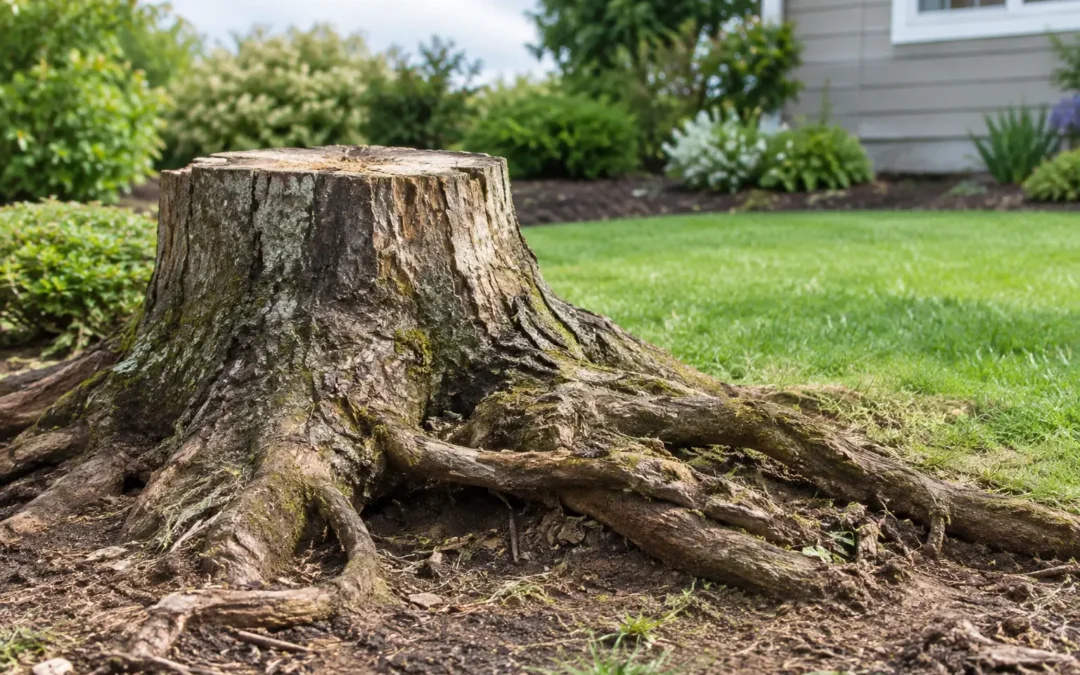
A tree can be gone while its roots still create problems underfoot. Are stump roots dangerous? They can be, especially when they sit near walkways, lawn areas, driveways, fences, or places where people mow, play, park, or work. The risk is not always obvious from the surface. A low stump, exposed root, or decaying root system can turn an otherwise useful part of a yard into a trip hazard or a difficult spot to maintain.
For Edmonton-area homeowners, acreage owners, and property managers, the practical question is not whether every old root needs to come out by hand. It is whether the remaining stump and root plate are limiting safe use of the property, inviting pests, or interfering with the next project. In many cases, professional stump grinding is the safer, cleaner answer.
Why stump roots can become a safety issue
Roots are designed to spread outward and hold a mature tree in place. After the tree is cut down, those roots do not disappear with the trunk. Large surface roots may remain raised above the lawn, while other parts of the system slowly decay below grade.
A raised root near a sidewalk, patio, gate, shed, or parking area is an obvious tripping concern. It is particularly troublesome on rental properties, commercial grounds, and shared outdoor spaces where owners have a responsibility to keep walking routes clear. Even a stump cut close to the ground can catch a foot when grass grows around it or snow covers it during winter.
The less visible concern is what happens as large roots break down. Decay can leave soft spots or shallow voids in the soil. The ground may settle unevenly, creating dips that collect water or make mowing rougher. This does not happen overnight, and it does not mean every old root system will cause a major ground failure. Still, it is worth paying attention when the area is used often or is planned for landscaping, a new lawn, or construction.
Mowers, equipment, and hidden damage
A stump or root that is just below grass height can be hard to spot from a riding mower or zero-turn mower. Striking it can damage blades, belts, decks, and other equipment. It can also jolt the operator or throw debris, particularly if the mower catches a piece of decayed wood or a loose stone around the stump.
Commercial maintenance crews face the same issue at a larger scale. A retained stump can add repeated delays to routine mowing and trimming, and each pass around it leaves an untidy patch of grass. Removing the obstacle often saves more than appearance. It makes regular grounds care safer and more efficient.
Pests and decay do not always stay contained
A stump is natural wood, but it is no longer a living tree with defenses. As it breaks down, it can attract insects and fungi that prefer damp, decaying material. Ants, beetles, and other insects may nest in or around it. Depending on the species and conditions, decaying wood can also support fungal growth.
That does not mean a stump automatically creates an infestation in a house or healthy trees nearby. The level of concern depends on the stump’s location, moisture, tree species, and the condition of surrounding structures and plants. But a stump beside a deck, wood fence, garage, garden bed, or outbuilding deserves more attention than one at the far edge of a large acreage.
Some tree species can also send up new shoots from the stump or roots. These suckers use energy from the remaining root system and can keep returning after they are cut back. Repeated trimming may control the shoots temporarily, but it does not create a clear, usable surface for lawn care or landscaping.
When buried roots interfere with your plans
The danger from stump roots is often less about an immediate injury and more about what they prevent you from doing. A buried root plate can complicate fence-post holes, garden beds, sod installation, grading, paving, and small building projects. Trying to work around it by hand can be slow and frustrating, especially in hard or compacted soil.
It is also common for property owners to discover roots only after starting a project. A shovel catches on wood beneath a flower bed. A post-hole auger binds. New sod will not sit level. In these cases, simply cutting the stump lower may not solve the problem, because the wider root flare is still occupying space below the surface.
Professional stump grinding reduces the stump and root plate below ground level, creating room to finish the area properly. At Stump Chomper, specialist gas-powered equipment uses carbide-tipped teeth to grind the stump material into woodchips, typically at least 10 inches below grade. That depth helps remove the visible obstacle and gives the site a practical starting point for reseeding, mulching, or a new landscape plan.
Grinding is not the same as excavating every long, lateral root across a property. Roots can extend far beyond the stump, and full root excavation can be disruptive, expensive, and unnecessary. The right approach depends on the location and the work planned for the site. If a specific root is affecting a fence line, utility route, or construction area, point it out during the estimate so the scope can be discussed clearly.
Do not turn stump removal into a DIY hazard
It is tempting to tackle an old stump with an axe, chainsaw, truck, chemicals, or a rented grinder. Those methods can create more risk than they remove. Roots can hold soil, rocks, metal, or old landscape materials that are not visible from the surface. A chainsaw can strike hidden dirt or stones, while pulling on a stump with a vehicle can damage turf, underground services, or the vehicle itself.
Stump grinders are powerful machines designed for a specific job. Their carbide-tipped cutting teeth break wood into chips quickly, but they require trained handling, controlled access to the work area, and attention to nearby windows, vehicles, fences, utilities, and people. A professional crew evaluates the stump’s size, location, and surrounding obstacles before work begins.
There is also a cleanup question. Grinding produces a mix of woodchips and soil. Those chips can be reused as mulch in some locations, spread appropriately, or removed depending on the plan for the area. If you intend to grow grass, install a garden, or prepare for construction, the final grading and material handling should suit that use rather than leaving a mound over the former stump.
Signs it is time to grind the stump
Not every retained stump is urgent. A small stump well away from traffic on a large rural property may be more of an appearance issue than a safety concern. But removal should move higher on the list when it is creating repeat problems or sitting in a high-use area.
Consider professional grinding when the stump or roots are:
- Raised in a lawn, walkway, play area, or regular work path
- Catching mower blades or forcing difficult trimming around the area
- Producing suckers that repeatedly return
- Soft, decaying, insect-active, or close to a structure
- Blocking a fence, garden, patio, shed, driveway, or landscaping project
- Located where snow cover makes the obstacle difficult to see
For landlords and commercial property managers, timing matters as much as the work itself. Addressing a stump before spring cleanup, tenant turnover, a landscaping refresh, or a paving project can prevent scheduling conflicts and reduce disruption later.
What a properly finished site should look like
A good stump-grinding job does more than make a stump disappear from view. The work area should be left clean, with the wood material contained and the remaining cavity ready for the next step. The exact finish depends on whether you want lawn, mulch, planting space, or access for a contractor.
For a lawn area, the ground may need to be backfilled with suitable soil, leveled, and reseeded after grinding. Woodchips mixed into the soil can settle as they decompose, so a fresh layer of soil and proper grading help create a better surface for grass. For mulch beds, some chips can be useful, provided they are kept at an appropriate depth and not piled against plant stems or building materials.
If you plan to plant a new tree in the same general location, avoid placing it directly in the old stump cavity. The remaining wood and changing soil conditions can make establishment harder. Moving the new tree a short distance away and preparing fresh planting soil usually gives it a better start.
A retained stump does not always demand immediate action, but it should not be dismissed as harmless yard clutter either. When roots, decay, mowing problems, or future plans start competing for the same space, a free, honest, and no-obligation estimate can clarify the safest way forward. The goal is simple: leave the ground safer, cleaner, and ready for whatever your property needs next.