
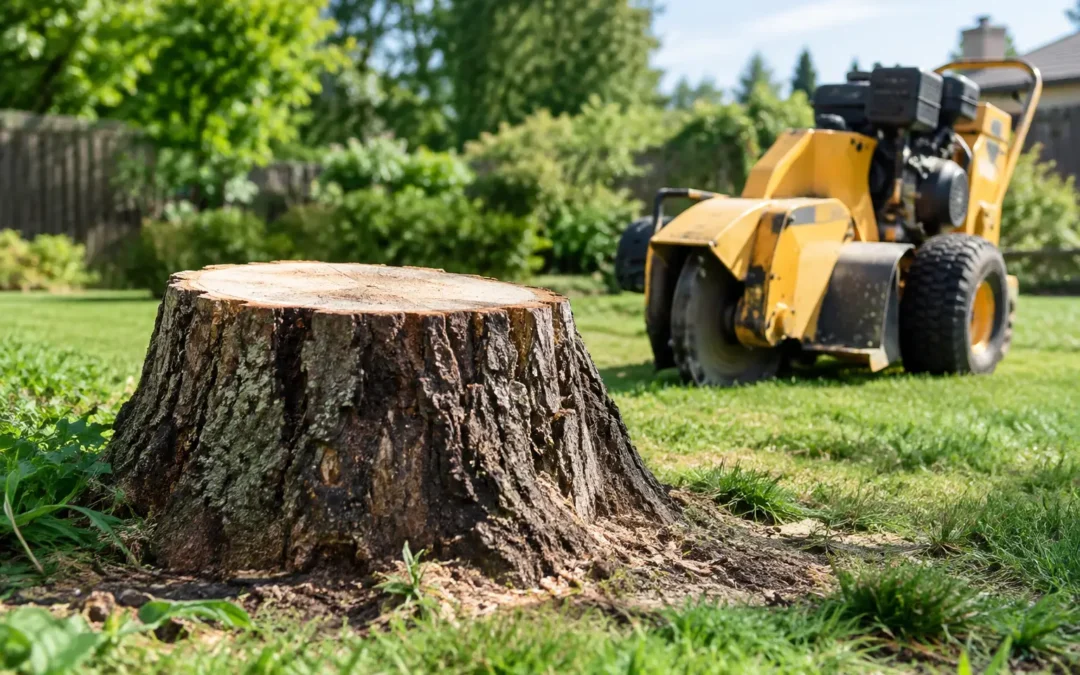
A tree can be gone, but the job is not always finished. The top reasons to remove tree stumps usually become clear the first time someone trips over one, a mower blade catches it, or a landscaping plan has to work around it. What looks like a harmless piece of old wood can create a long-term maintenance problem in a yard, acreage, rental property, or commercial landscape.
Stump grinding offers a practical way to deal with that leftover problem. Rather than waiting years for a stump to decay on its own, a professional grinder uses carbide-tipped teeth to break down the stump and root plate below grade. The result is a safer, cleaner area that can be prepared for grass, mulch, planting, or a new project.
Top Reasons to Remove Tree Stumps After Tree Removal
A stump creates a real trip hazard
A low stump can be difficult to see, especially when grass grows around it, leaves cover it in fall, or snow builds up during an Edmonton winter. That makes it a concern for children, visitors, tenants, delivery workers, and anyone walking the property after dark.
The risk is not limited to front yards. Stumps in side yards, behind garages, along fence lines, and on acreage trails can catch a foot just as easily. On commercial grounds, one overlooked stump can also become a liability issue. Grinding it below ground level removes that obstruction instead of asking people to remember where it is.
It can damage mowers and other equipment
Stumps are hard on lawn equipment. Striking one with a mower can bend or break blades, damage a deck, shear a belt, or stop the job altogether. Even if the mower does not make direct contact, operators often have to trim around the stump by hand, leaving an awkward patch of tall grass that needs extra attention every week.
This matters for homeowners, but it matters even more for property managers and grounds crews maintaining larger sites. A stump that slows mowing across several seasons costs time and increases the chance of equipment repairs. Removing it makes routine maintenance simpler and keeps the lawn usable from edge to edge.
Decaying wood can attract pests
As a stump breaks down, it stays damp and becomes attractive habitat for insects. Ants, beetles, termites in some areas, and other wood-boring pests may nest in or around decaying material. Fungi can also establish themselves in the wood, particularly where moisture is trapped.
Not every old stump leads to a serious pest issue, and a single stump does not automatically threaten nearby buildings or healthy trees. Still, leaving rotting wood beside a home, deck, shed, or landscaped bed gives pests one more protected place to settle. Removal is often the cleaner choice when the stump is already soft, hollow, or showing signs of insect activity.
Stumps can keep producing unwanted shoots
Some tree species continue trying to grow after the trunk has been cut down. New shoots may appear from the stump or along the remaining roots. These suckers can pop up across a lawn or garden bed, creating a repeating chore throughout the growing season.
Cutting the shoots back may improve the appearance temporarily, but it does not always stop the root system from sending out more. Grinding through the stump and root plate removes the main source of that growth. It also gives you a better chance to reset the space without constantly dealing with shoots near sidewalks, fences, or garden borders.
You regain valuable space
A stump takes up more room than its visible diameter suggests. You have to mow around it, avoid it while moving equipment, and design planting beds or hardscaping around its roots. In a compact city yard, that can mean losing the exact spot where you wanted a patio extension, raised bed, play area, or new tree.
On an acreage or commercial property, several retained stumps can make routes harder for maintenance equipment and limit how the land is used. Once a stump is ground down, the area is much easier to level and finish. The space can be reseeded, mulched, landscaped, or incorporated into a construction plan.
Why Grinding Below Grade Makes a Difference
Some property owners consider cutting a stump as close to the ground as possible and leaving it there. That can improve appearance for a while, but it does not eliminate the roots, decay, mowing obstruction, or potential for suckering. Chemical products and DIY digging are also options, but they can take considerable time, involve handling products carefully, or require more labor than expected.
Professional stump grinding is designed for a more immediate, controlled result. A specialist grinder works the stump into woodchips using carbide-tipped teeth, including the root plate near the surface. Stump Chomper grinds stumps to at least 10 inches below ground level, which creates room for a proper finish rather than leaving a shallow woody obstacle under a thin layer of soil.
Grinding does not mean every distant root is physically pulled from the yard. Large tree roots can extend well beyond the stump, and removing all of them by excavation can disturb lawns, utilities, pavement, and established landscaping. In most cases, grinding the central stump and major root plate is the practical balance between thorough removal and protecting the surrounding property.
What Happens to the Woodchips?
Grinding produces a mix of woodchips and soil. Those chips can be useful as mulch around trees and shrubs, provided they are kept back from plant stems and foundations. They can also be removed or spread as part of the site cleanup, depending on the plan for the area.
If you want to grow grass, the ground will usually need topsoil and seed after the woodchips are managed. For a garden bed, mulch may be useful, but the grade should still be adjusted so water drains properly. If construction or a new hardscape is planned, tell the grinding crew in advance so the desired depth and cleanup needs are clear.
Timing Matters, but You Do Not Always Have to Wait
Stumps can generally be ground in most seasons when site conditions allow. Many property owners arrange removal soon after a tree comes down so the yard can be restored in the same project. This is especially helpful before installing sod, building a fence, planning a patio, or putting a property on the market.
There are times when waiting makes sense. If a landscaping design is still changing, you may want to confirm the final layout before deciding how to use the chips or whether to remove nearby surface roots. Frozen ground, access limitations, buried utilities, tight gates, and stump location can also affect scheduling and approach. A clear estimate should account for those site-specific details before work begins.
Choose a Specialist Who Respects the Site
Stump grinding equipment is powerful, and proper operation matters. The crew needs enough working room, an understanding of nearby structures and utilities, and a plan to control debris. An experienced operator will assess access, locate the stump relative to fences and buildings, explain what can be ground safely, and leave the site in a condition that makes the next step easier.
For property owners, the goal is not simply to make the stump disappear from view. It is to remove a hazard, protect mowing equipment, reduce ongoing maintenance, and create a usable piece of ground. A free, honest, no-obligation estimate helps you decide whether removal fits your current plans and budget.
A finished yard should not force you to mow in circles, warn guests about hidden obstacles, or postpone the project you actually want to build. When the stump is gone and the area is cleaned up, the property is ready to be used on your terms.