
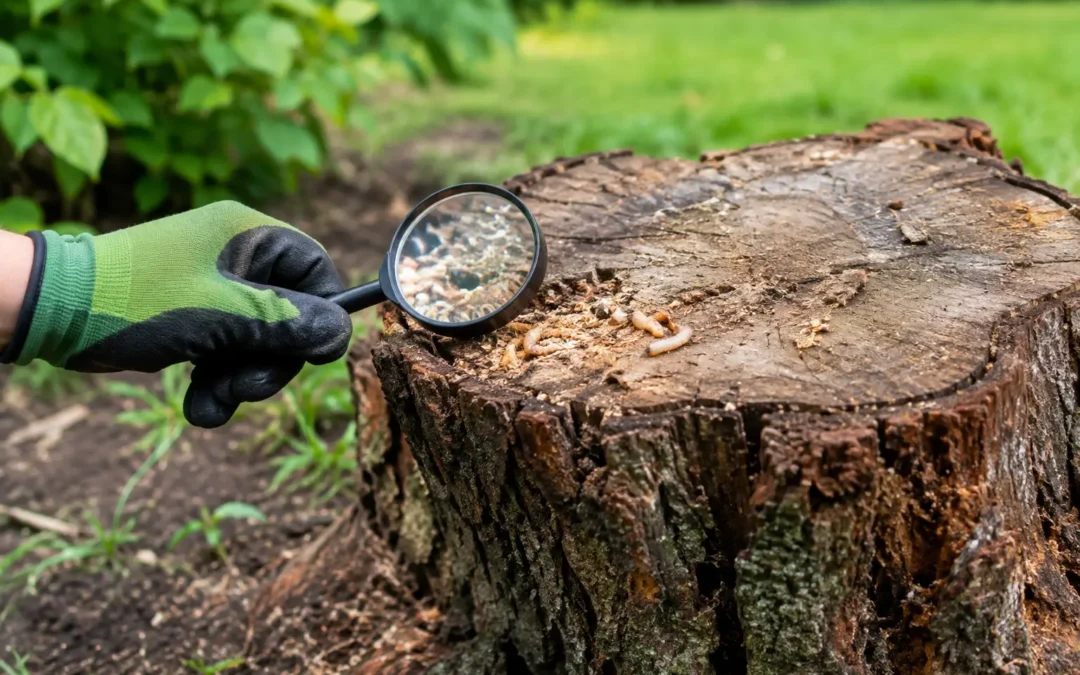
A stump can look harmless from the lawn mower seat, then reveal a busy insect colony when you get close. Knowing how to identify stump pests helps you separate normal wood decay from a problem that could affect your yard, nearby trees, pets, or outdoor use of the property. For Edmonton-area homeowners, acreage owners, and property managers, the goal is not to diagnose every bug. It is to recognize when an old stump has become an active nesting or breeding site and decide whether removal is the sensible next step.
Start With a Careful Visual Inspection
Choose a dry day and inspect the stump from a short distance before touching it. Look around the top, bark edge, exposed roots, and surrounding soil. Fresh activity is usually easier to spot in daylight, especially after the ground has warmed up in spring or early summer.
The most useful clues are new holes, piles of fine wood material, live insects entering and leaving, soft or hollow sections, and fungal growth. A stump that has sat quietly for years may still be decaying, but sudden changes such as fresh sawdust or a growing number of insects deserve attention.
Do not put your hands into cracks, cavities, or loose bark. Old stumps can shelter wasps, ants, spiders, and other wildlife. They can also break apart unexpectedly if the wood is heavily decayed. Use a flashlight to look into openings, and keep children and pets back until you know what is living there.
Look for Holes, Tunnels, and Fine Wood Dust
Small holes in a stump do not automatically mean a serious infestation. Different beetles and wood-boring insects leave holes as they emerge from wood, and some may have completed their life cycle before you ever notice the damage. Still, hole size, location, and fresh debris can tell you whether activity is current.
Round or oval holes paired with fresh, powdery material may point to wood-boring beetles. The debris can resemble sawdust, flour, or tiny wood shavings. Check whether it is collecting beneath a hole or along the stump base. If the material looks fresh, dry, and light-colored, insects may still be working inside the wood.
Visible tunnels under loose bark are another sign. Peel nothing away if insects are active, but look for winding channels already exposed by weather or decay. These galleries can be created by beetle larvae, ants, or other insects using weakened wood for shelter.
A stump with old holes but no fresh dust, no insects, and no recent changes is often simply decomposing. That is different from a stump producing new material every week or showing increasing tunnel activity.
How to Identify Stump Pests by Their Activity
The insects themselves often provide the clearest answer. Watch from a safe distance for several minutes. Notice where they enter the stump, whether they fly or crawl, and whether there is steady traffic rather than an occasional passing insect.
Carpenter ants are common around damp, decaying wood. They are larger ants, often black or dark reddish-black, and they can establish nesting galleries in softened stumps. Carpenter ants do not eat wood as food, but they excavate it for nesting space. Their presence usually means the stump has enough moisture and decay to be attractive habitat.
You may see coarse, sawdust-like material near carpenter ant openings. This material can include wood fragments, dead insects, and bits of insulation-like nesting debris. Follow the ant trail if it is safe to do so. A colony using only the stump is one issue. A trail moving from the stump toward a shed, fence, deck, garage, or home is a stronger reason to address the site promptly.
Beetles are another common visitor. Adult beetles may be visible on the bark or near exit holes, while larvae remain hidden inside. Many species target dead or dying wood and do not threaten healthy structures. Even so, a heavily infested stump can continue to deteriorate, attract other insects, and become difficult to mow around or landscape near.
Wasps, yellowjackets, and hornets deserve a different response. Some species use cavities in stumps or spaces beneath root plates for nests. Repeated flights in and out of one opening, especially when insects react to your approach, can indicate a nest. Do not plug the hole, spray blindly, or try to split the stump apart. Keep the area clear and contact an appropriate pest-control professional if the nest presents a risk.
Separate Insect Evidence From Fungal Decay
Mushrooms, shelf-like growths, or soft dark wood are not insects, but they matter. Fungi break down wood fibers and create the moisture-rich, softened conditions that many pests prefer. A stump can be full of fungal decay without harboring an active insect colony, and it can also support both.
Fungal growth is especially common after wet weather or irrigation. You may see mushrooms at the stump base, clusters around roots, or bracket fungi growing from the side. The visible fungus is only part of the process. Much of the decay may be inside the stump and root system, where it weakens the wood and makes the area less stable.
If the stump is near other trees, inspect those trees for unusual dieback, mushrooms near the trunk base, peeling bark, or new insect damage. Not every fungus travels from a stump to a living tree, and not every insect in dead wood attacks healthy trees. The risk depends on the tree species, pest species, moisture conditions, and overall health of nearby plants. A local arborist can help if you are seeing symptoms on standing trees.
Check the Area Around the Stump
A stump problem rarely stays limited to the cut surface. Walk a few steps back and look at the surrounding landscape. Are roots lifting soil? Is grass thinning around the stump? Are suckers growing from roots? Is there a trail of insects along a fence line or toward a building?
Pay particular attention to stumps beside decks, sheds, wood fences, stacked firewood, raised garden beds, and exterior walls. These features do not guarantee that pests will spread, but they provide more places for insects to shelter. Damp mulch piled tightly against a stump can also hold moisture and make the site more appealing to ants and wood-decay organisms.
Commercial sites and rental properties need an extra layer of caution. An insect-active stump beside a walkway, playground, parking area, or maintained lawn can create more than an appearance issue. If wasps nest inside it, the stump becomes a public-safety concern. If decay has made it unstable, it can also be a trip hazard or a mower-damage risk.
When Monitoring Is Reasonable and When Removal Makes Sense
Monitoring can be reasonable when a stump is far from buildings and activity areas, there is no aggressive insect nest, and the signs appear old rather than fresh. Take a few photos, check the site again after a week or two, and watch for new debris, insect traffic, or spreading fungal growth.
Removal is often the better choice when the stump is actively housing ants or wasps, interfering with mowing, producing suckers, sitting near a structure, or preventing you from using the space. It is also practical when you are preparing for a garden, new lawn, fence, patio, or construction work. Leaving a decaying stump in place may be cheaper in the short term, but it can mean repeated maintenance and an ongoing habitat for unwanted pests.
Professional stump grinding removes the visible stump and root plate below grade rather than relying on chemicals or waiting years for decay. At Stump Chomper, carbide-tipped grinding teeth reduce stumps to at least 10 inches below ground level, turning the material into reusable woodchips. That removes the primary habitat while leaving the site ready for reseeding, mulching, landscaping, or the next phase of your project.
Avoid These Common Mistakes
Do not assume every insect needs pesticide treatment. Spraying an unknown hole can miss the actual nest, harm beneficial insects, and create unnecessary exposure for people and pets. It also does not solve the larger issue if a decayed stump remains in place.
Avoid burning, digging out, or striking a suspect stump with an axe. Roots can extend farther than expected, buried utilities may be nearby, and concealed wasps can react quickly when disturbed. Renting a grinder without experience also carries real risk because stump grinders are powerful machines designed for trained operators.
If you suspect termites or see insect activity moving into a building, treat that as a separate property-protection concern and contact a qualified pest professional. Stump grinding removes the wood habitat, but an inspection is still needed when insects may already be established in a structure.
A close look at a stump can save you from a bigger yard problem later. If you see fresh wood dust, steady insect traffic, a wasp entry point, or worsening decay, keep the area clear and arrange for a proper assessment before the stump takes up more of your property than it should.