
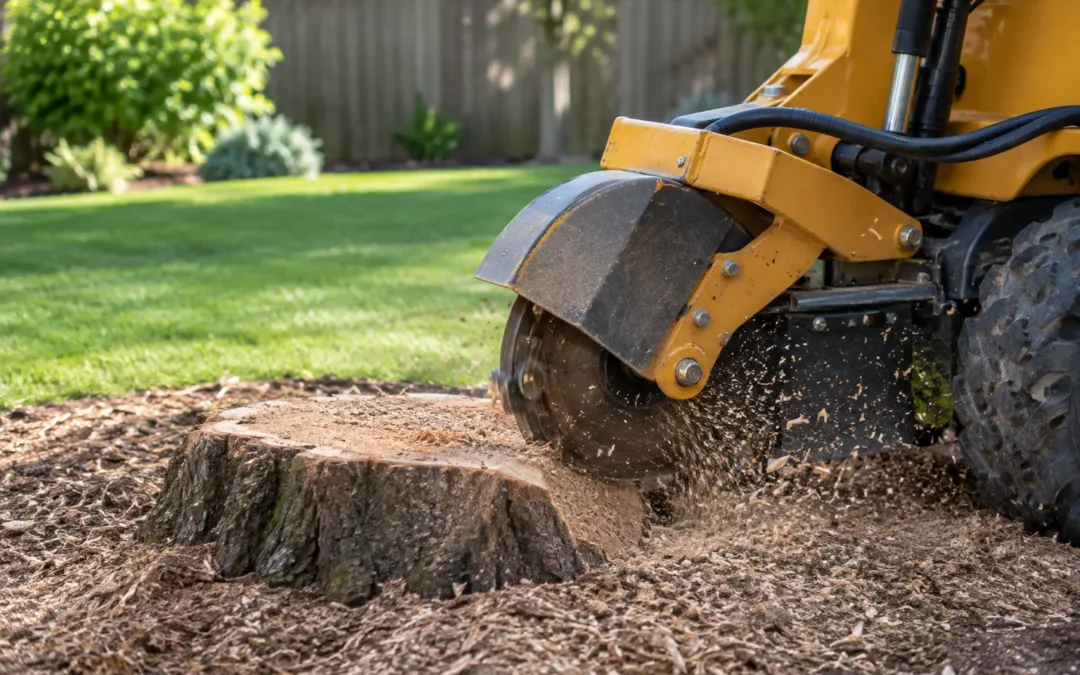
A tree can be gone while the hardest part is still firmly in the ground. Root plate grinding deals with the thick, woody base beneath the stump – the area where the trunk flares into major roots. For homeowners and property managers, this is often the difference between a yard that merely looks cleared and one that is genuinely safer, easier to maintain, and ready for its next use.
A retained root plate can sit just below the surface, interfere with grading, damage mower blades, and limit where you can plant, pave, or build. It may not be obvious from across the lawn, but it becomes very obvious when a wheel drops over it or a landscaping project reaches buried wood.
What Root Plate Grinding Actually Removes
The root plate is not just a few shallow roots spreading away from a stump. It is the dense central mass of wood at the base of the tree, including the root flare and larger structural roots nearest the trunk. Depending on the species, age, and size of the tree, this section can be broad, heavy, and much tougher than it appears above ground.
Professional grinding uses a purpose-built, gas-powered stump grinder fitted with carbide-tipped teeth. The operator works the cutting wheel across the stump and root plate in controlled passes, reducing the wood into chips rather than trying to pull an enormous buried mass from the ground. This approach avoids the wide excavation, heavy equipment access, and potential damage that can come with digging out a root system.
At Stump Chomper, the objective is to grind the stump and root plate to at least 10 inches below grade where site conditions allow. That depth gives the area room for topsoil and finishing work, rather than leaving hard wood close enough to the surface to create a future problem.
Grinding does not mean every distant, fine root is removed from the property. Most lateral roots farther from the trunk will naturally decay over time. The practical focus is the substantial wood that affects safety, lawn care, landscaping, and construction plans.
Why the Root Plate Matters After Tree Removal
Leaving the root plate behind can create problems that show up gradually. A lawn may settle unevenly as wood breaks down, or a thin layer of soil over a buried root flare may fail under foot traffic. On a commercial site, these conditions can create a maintenance issue or a preventable trip hazard near walkways, parking areas, and common spaces.
The root plate also takes up valuable ground. In a small city yard, that may mean losing the best spot for a garden bed, patio extension, shed, fence post, or fresh sod. On acreages and larger commercial properties, it can complicate access for mowing equipment and leave an awkward obstacle in an otherwise open area.
There are biological reasons to address the remaining wood as well. Old stumps and root plates can hold moisture and decay, which may attract insects or provide a place for fungal activity. Some tree species can also send up sucker growth from remaining roots. Grinding the central mass does not guarantee that every sucker will never appear, but it removes the main stump structure and gives the site a cleaner start.
How Professional Root Plate Grinding Protects Your Property
A grinder is powerful equipment, but good results depend on more than horsepower. The operator needs to assess access, utilities, nearby structures, fencing, irrigation, landscaping, and the slope of the site before work begins. A root plate beside a foundation, utility line, retaining wall, or mature garden needs a different approach than one in an open backyard.
The grinding process is deliberate. Carbide-tipped teeth cut the wood into manageable chips while the operator controls the depth and width of the work area. Protective measures help contain debris, and the crew watches for rocks, metal, and other hidden material that can affect the work. This is not a job suited to a chainsaw, an axe, or a rented machine in inexperienced hands.
Professional service also means clear expectations. The size of the stump, spread of the root plate, access to the site, soil conditions, and requested depth all affect the scope of work. A free, honest, no-obligation estimate should explain what will be ground, how the area will be left, and whether chip removal or backfilling is part of the plan.
What Happens to the Woodchips
Grinding produces woodchips mixed with some soil. Those chips are useful material, but they should be handled properly based on what you plan to do next.
If the area will become a garden bed, the chips can often be used as mulch away from the base of plants. If you are preparing for grass, many property owners prefer to remove or redistribute the excess chips, add clean topsoil, and seed or sod the area. Too much uncomposted wood material directly beneath a new lawn can settle as it decomposes and may compete with grass for nitrogen near the surface.
For construction, paving, or a structure, the site may need additional excavation and properly compacted fill after grinding. Root plate grinding clears the wood obstacle, but it is not a substitute for the site preparation required for a patio, driveway, foundation, or other load-bearing project.
Preparing the Area for Its Next Use
The best finish depends on your plans. For a lawn, rake out excess grindings, bring the surface up with good topsoil, level it carefully, and then seed or lay sod. Keep the new grass watered while it establishes. A slight amount of future settling is possible because organic material below ground continues to break down, so it is wise to retain some topsoil for minor touch-ups.
For landscaping, root plate grinding creates room for soil, edging, shrubs, or mulch. If you want to replant a tree in the same general area, choose a location offset from the original stump whenever possible. The former tree site can still contain remaining roots and chips, and a new tree benefits from fresh, uncompacted soil outside that zone.
For commercial grounds, a properly ground and cleaned site supports safer mowing, more consistent turf maintenance, and better curb appeal. It also makes it easier for grounds crews to see and manage the finished surface rather than working around a decaying obstacle year after year.
When Grinding May Need a Different Plan
Root plate grinding is usually the efficient solution, but every property has its limits. If buried utilities are nearby, they must be identified before any grinding begins. If the stump is tight against a building, deck, fence, or concrete surface, access and safe operating clearance may limit how much of the root plate can be reached.
Some sites also call for a conversation about full excavation rather than grinding. This can be the case when a deep footing, utility installation, or major construction project requires the entire area to be cleared and engineered. Excavation is more disruptive and can leave a larger hole, but it may be appropriate when the project demands it.
Frozen ground, poor access, steep slopes, and hidden debris can also affect scheduling and pricing. Straight answers matter here. A qualified crew should explain the conditions before work starts instead of surprising you with vague add-ons after the grinder arrives.
A Cleaner Finish Starts Below Ground
The visible stump is only part of the job. The buried root plate is where many future mowing, landscaping, and safety problems begin. Grinding it below grade turns a stubborn remnant of tree removal into reusable chips and a workable piece of ground.
Whether you are restoring a backyard lawn, clearing an acreage, or maintaining a commercial property in Edmonton and surrounding communities, ask what will happen below the surface – not just what will disappear above it. A careful grind, honest scope of work, and thorough cleanup leave your property ready for whatever comes next.