
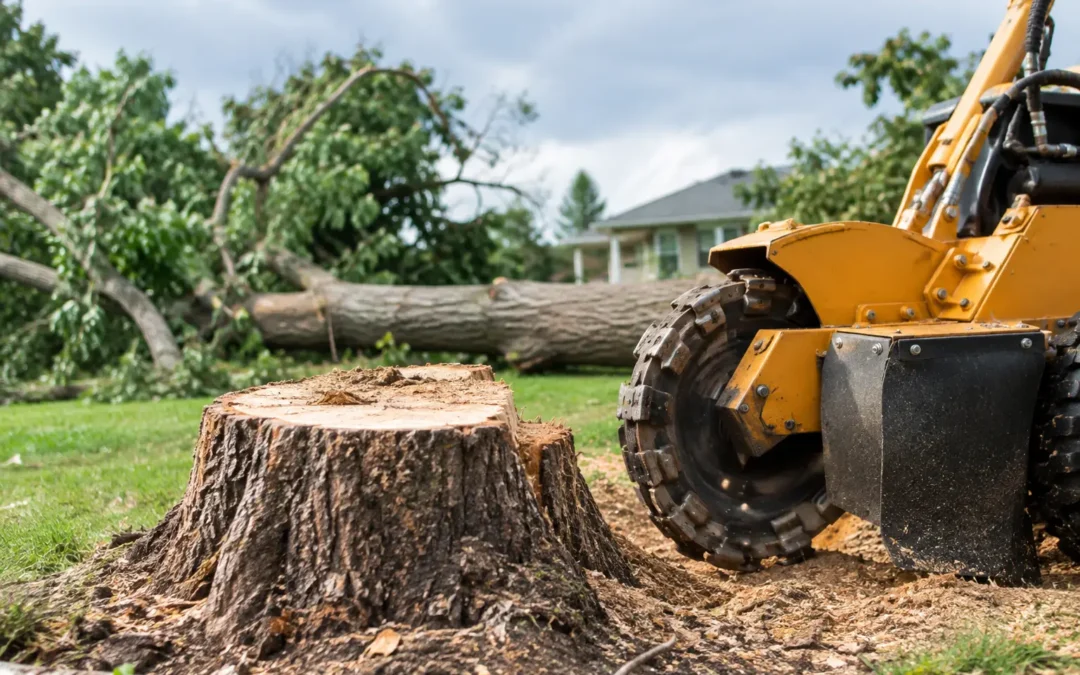
A storm can leave more behind than branches and a fallen trunk. When a tree snaps, uproots, or is cut down after wind damage, the remaining base can be a serious obstacle. Storm stump removal addresses the part of the cleanup that is easy to postpone but difficult to live with: the stump, exposed root plate, and uneven ground left where the tree once stood.
For homeowners, acreage owners, and commercial property managers, that leftover wood can create a trip hazard, block repairs, damage mowing equipment, and take up usable space. Professional grinding turns a dangerous, awkward remnant into a site that can be cleaned up, leveled, and prepared for its next use.
Why storm-damaged stumps need prompt attention
A healthy tree that has been removed leaves a predictable stump. A storm-damaged tree can leave something much less tidy. High winds may lift a root plate out of the ground, split the trunk near the base, or leave jagged wood and roots spread across the lawn. Heavy snow and ice can also break trees unevenly, especially older trees or trees with existing decay.
The immediate priority is always safety. If a fallen tree has affected a power line, gas line, building, fence, or public walkway, keep people away from the area and contact the appropriate emergency or utility service first. Stump work should begin only after the site is safe and the trunk and branches have been cleared.
Once that work is complete, the remaining stump is more than an appearance issue. A low stump can disappear under snow, grass, or leaves and become a hazard for children, visitors, tenants, and grounds crews. On commercial sites, it can create a liability concern. On residential properties, it can catch a lawn mower blade, damage a snowblower, or make routine yard work harder than it should be.
There is also a practical timing issue. The longer damaged wood remains, the more likely it is to attract insects and hold moisture. Decay fungi may already be present in a storm-weakened tree. Grinding does not solve every tree-health concern across a property, but it removes the retained woody material that can continue to get in the way.
What storm stump removal involves
Stump removal after a storm is usually completed by grinding rather than digging the entire stump out with an excavator. Excavation has a place on some construction sites, particularly where major grading is already planned. For most lawns, gardens, and maintained commercial grounds, it can cause more disruption than necessary.
A stump grinder uses a rotating cutting wheel fitted with carbide-tipped teeth. The operator works across the stump and visible root flare in controlled passes, reducing the wood into chips. Professional grinding generally takes the stump and root plate at least 10 inches below grade, allowing the area to be covered with soil and prepared for grass, mulch, or landscaping.
Storm damage can make this process more involved. A stump may be cracked, partially lifted, covered by debris, or surrounded by torn roots. The grinder still removes the woody material, but the operator must assess access, ground conditions, nearby structures, and concealed obstacles before starting. Irrigation lines, shallow utilities, landscape edging, concrete, and buried metal can all affect how the work is planned.
That is why a quick look at the stump from a distance does not always tell the full story. Diameter matters, but so do root spread, species, site access, slope, and whether the tree failed cleanly or pulled a large section of ground upward with it.
Grinding versus pulling the stump
Pulling a storm stump with a truck, chain, or rented equipment may sound like a fast solution. It often creates a much larger hole, tears surrounding turf, and puts strain on nearby soil and hardscape. It can also be dangerous when roots release unpredictably or when rigging fails.
Grinding is usually the more property-conscious option because it removes the stump below ground while limiting disturbance to the surrounding area. The trade-off is that grinding creates woodchips and leaves much of the deeper root system to break down naturally over time. For a lawn, garden bed, or general landscape repair, that is typically the right balance. If a new foundation, utility trench, or major excavation is planned directly through the area, the project requirements may call for a different approach.
Preparing the site after a storm
After a storm, access can be as important as the stump itself. Fallen branches, fence sections, loose roofing material, and saturated ground can delay safe equipment operation. Clearing movable debris before the crew arrives helps, but do not take risks with hanging limbs or tangled branches. Those jobs may require a qualified tree service before grinding begins.
It is helpful to mark sprinkler heads, landscape lighting, septic components, or private underground lines near the stump if you know where they are. Let the operator know about gates, narrow side yards, soft areas, retaining walls, and any recent construction. Clear information helps prevent surprises and supports a safer, cleaner job.
The weather also matters. Grinding can often be completed in a range of conditions, but frozen ground, deep snow, standing water, or unstable soil can affect scheduling and cleanup. A reputable contractor should explain any site limitations clearly rather than forcing equipment onto a property where it may leave ruts or cause unnecessary damage.
What happens to the woodchips and open area
Grinding produces a mix of woodchips and soil. Those chips can be useful as mulch around established trees and shrubs, provided they are not piled directly against trunks or stems. Some property owners choose to keep them for garden paths or landscape beds. Others prefer the chips moved aside or removed so the area can be restored.
If the goal is lawn repair, the ground usually needs additional topsoil after grinding. Woodchips decompose and settle, so they should not simply be covered with a thin layer of sod. A better approach is to remove or redistribute excess chips, add clean soil, grade the area to match the surrounding lawn, and then seed or sod when conditions are suitable.
Replanting a new tree directly in the exact location of the old stump is not always ideal. Remaining roots, settling soil, and changing nutrient conditions can make establishment harder. Moving the new planting spot several feet away is often the better choice, especially for larger tree species. For a flower bed, shrub planting, or expanded lawn, the ground can usually be put back into service much sooner.
When a stump is more than a yard nuisance
Storm stump removal becomes particularly valuable when the stump sits near a driveway, sidewalk, parking area, playground, mowing route, or construction zone. These are places where a hidden root flare or uneven patch of ground can create repeated problems. Property managers may also need the area restored quickly after a storm so maintenance crews can safely resume regular work.
On acreages and rural properties, stumps can interfere with access routes, fencing, brush mowing, and future landscaping. In smaller city yards, the concern is often usable space. Removing a stump can open room for a patio extension, garden, shed pad, or simply a cleaner lawn line.
Stump Chomper approaches this work with specialist grinding equipment, straightforward estimates, and careful cleanup. The goal is not just to make the stump disappear from view. It is to leave the site in a condition that makes the next step easier, whether that means reseeding, mulching, landscaping, or repairing ground disturbed by the storm.
A storm does enough damage on its own. Once the immediate cleanup is complete, dealing with the stump is a practical way to make the property safer, easier to maintain, and ready to recover.