
A freshly cut tree can look finished, then send up small shoots around the stump or across the lawn a few weeks later. So, will grinding stop tree regrowth? In most cases, grinding the stump well below grade greatly reduces the tree’s ability to regrow from the stump. But the honest answer depends on the tree species, the condition of its root system, and whether existing roots are already capable of producing suckers.
For Edmonton-area property owners, that distinction matters. A proper stump grinding job removes the visible obstacle, makes the area safer to mow and walk across, and usually ends the repeated growth coming from the stump itself. Some aggressive trees, however, can still produce shoots from roots beyond the ground-out area. Knowing what to expect helps you choose the right next step instead of being surprised by a few green shoots next season.
Will Grinding Stop Tree Regrowth Completely?
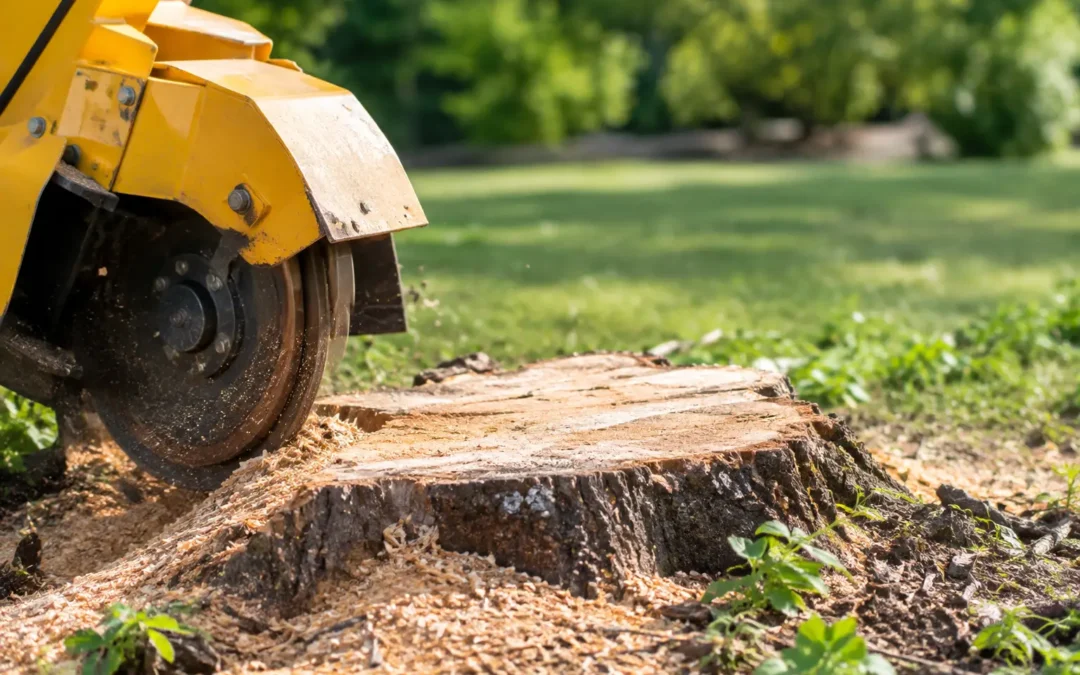
Stump grinding removes the stump and root plate area where a cut tree is most likely to keep pushing out new growth. A professional grinder uses carbide-tipped teeth to break the wood into chips, typically taking the stump at least 10 inches below ground level. Without a solid stump above the soil and its stored energy reserves, most trees cannot continue growing in the same way.
That is why grinding is an effective answer for the majority of unwanted stumps. It eliminates the part of the tree that creates a trip hazard, catches mower blades, occupies usable yard space, and often sends up sprouts near the cut surface.
Still, grinding is not the same as excavating every root from the property. Tree roots can extend well beyond the stump, especially on mature trees. Certain species can create root suckers – new shoots that emerge from living roots some distance from the original trunk. Grinding removes the central source of regrowth, but it cannot guarantee that every root in the lawn has immediately stopped functioning.
The Tree Species Makes a Difference
Not every tree responds to removal in the same way. Many common conifers and several hardwood species do not readily sprout once the stump has been properly ground. Other trees are more persistent because they are naturally adapted to regenerate after damage.
Aspen, poplar, willow, and some types of elm are well known for sending up suckers. If one of these trees was removed, small shoots may appear around the former stump or farther out in the yard. This does not necessarily mean the grinding was incomplete. It may mean the remaining roots are using stored energy to produce new shoots while they decline.
A healthy, mature tree with a broad root system can have enough reserves to keep trying for a while. Conversely, a stump from a smaller or already weakened tree may stop producing growth quickly. The season also affects what you see. Spring and early summer are when suckering is most noticeable, because roots are responding to warm soil and active growing conditions.
What Grinding Actually Removes
A stump grinder is designed to safely reduce woody material below the surface, not to pull out a large network of roots and disturb the entire yard. This is a major advantage for lawns, gardens, fences, driveways, and nearby utilities. Full excavation can leave a much larger hole, compact surrounding soil, and cause unnecessary damage to the property.
During professional grinding, the operator works through the stump with a specialized gas-powered machine. The carbide-tipped cutting teeth turn dense wood and the accessible root flare into woodchips. The stump is ground below grade so the area can be covered with soil and prepared for grass, mulch, landscaping, or another use.
Large structural roots closest to the stump are addressed as part of the root plate. Smaller roots farther away are generally left to decay underground. This approach gives property owners a clean, usable surface without turning a stump-removal project into an excavation project.
Why You May Still See Shoots After Grinding
If shoots appear after the stump has been ground, they usually fall into one of two categories. They may be sprouts from remaining roots, or they may be seedlings from nearby trees. The difference is useful when deciding whether any follow-up is needed.
Root suckers often appear in a line or cluster connected to the former tree’s root path. They may grow quickly and have leaves similar to the removed tree. Seedlings tend to be scattered and can come from wind-blown seed, birds, or neighboring trees.
For root suckers, regular cutting or mowing is usually the practical first response. Each time a young shoot is removed before it can develop leaves and replenish energy, the remaining root system loses more of its stored resources. Persistent mowing over a growing season often resolves light suckering without major disruption to the lawn.
Avoid assuming a chemical treatment is always necessary. Herbicides can be effective in limited situations, but they require careful selection and application, particularly near gardens, desirable trees, pets, and drainage areas. A professional can help you understand whether continued cutting, targeted treatment, or another approach makes sense for your property.
Can a Ground Stump Grow Back?
A stump that has been thoroughly ground below grade will not grow back into the original tree. The trunk structure is gone, and the remaining wood is converted into chips that will gradually break down. You will not see the old stump rise back through the lawn.
What can happen is that a sucker from an established root becomes a new small tree if it is ignored. That is different from the original stump regenerating. If a shoot is allowed to grow for years, it may develop its own trunk and create a new maintenance issue. Catching it early makes the solution simple.
This is one reason a clean finish matters. Once the stump is gone and the area is level, it is easier to see new shoots, mow the space, and keep the yard under control. There is no stump left to mow around, hide insects, or interfere with future landscaping plans.
Preparing the Area After Stump Grinding
The grinding process creates a mix of woodchips and soil. Those chips are useful material, but they should be managed properly depending on what you want to do with the area. They can be spread as mulch in suitable landscape beds, or excess material can be removed if you need a clean planting or lawn surface.
For grass, remove or spread out the bulk of the woodchips, then bring in clean topsoil to restore the grade. Woodchips buried deeply in a planting area can temporarily use nitrogen as they decompose, which is not ideal for new grass seed or shallow-rooted plants. A layer of quality soil over the ground-out area gives seed or sod a better start.
If you plan to plant another tree, do not place it directly in the same spot as the old stump. The remaining roots, settling soil, and decomposing wood can make that location difficult for a young tree. Shift the new planting location several feet away when possible and choose a species appropriate for the space.
For a garden bed, patio edge, shed base, or other construction project, tell the grinding crew about your plans before the work begins. The needed depth and cleanup approach may differ depending on whether you are reseeding, installing landscape features, or preparing for a structure.
When to Ask for Advice Before Grinding
Grinding is the right solution for most residential and commercial stumps, but a brief site discussion can prevent surprises. Let the contractor know if the removed tree was an aggressive sucker-producing species, if shoots are already appearing across the property, or if the stump is close to utilities, foundations, retaining walls, fences, or irrigation.
It is also wise to discuss access. Professional grinding equipment is built for hard work, but gates, slopes, landscaping, and tight side yards can affect the safest way to complete the job. An experienced crew should explain what the equipment can reach, how deeply the stump will be ground, what will happen to the chips, and how the site will be left afterward.
At Stump Chomper, that means providing a free, honest estimate without obligation and treating the finished yard as part of the job. The goal is not simply to make a stump disappear for the afternoon. It is to leave your property safer, cleaner, and ready for what comes next.
A few stubborn shoots after grinding do not mean you are back at square one. Keep them cut while the remaining roots fade, restore the ground with proper soil, and enjoy the space that a buried stump was taking from your yard.