
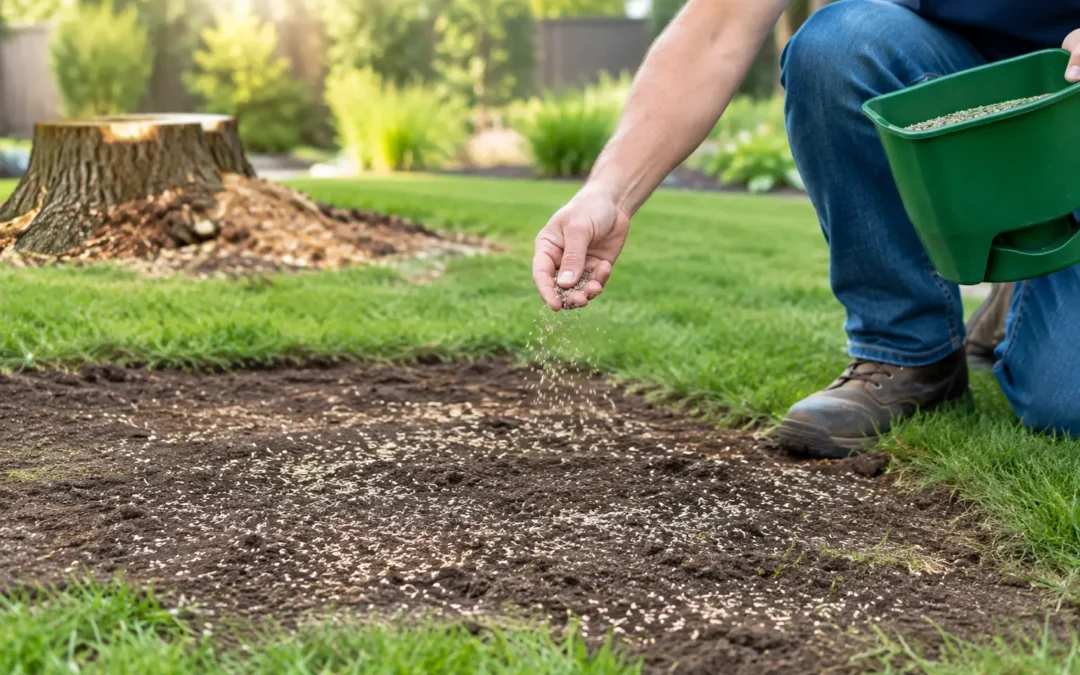
A freshly ground stump gives you back usable yard space, but the spot will not automatically grow into a smooth lawn. Knowing how to reseed after stump grinding helps prevent a thin, sunken, weedy patch where the stump once stood. The work is straightforward, but soil preparation matters more here than it does when overseeding an established lawn.
A professional grinder uses carbide-tipped teeth to reduce the stump and major root plate below grade. That removes the trip hazard, protects mower blades, and leaves the area ready for restoration. Still, the ground contains woodchips, disturbed soil, and sometimes settling roots below the surface. Address those conditions first, then your new grass has a much better chance of matching the rest of the property.
Start by Removing Excess Woodchips
Stump grindings are useful material, but they are not good seedbed soil. A light amount can be worked into a nearby mulch bed or used around trees and shrubs, provided it is kept back from trunks. A deep layer left in the lawn area can interfere with seed-to-soil contact and temporarily tie up nitrogen as it breaks down.
Rake out as much of the loose woodchip material as practical, especially from the top few inches where grass roots need to develop. You do not need to chase every small chip out of the soil. The goal is to remove the concentrated pile and leave mostly mineral soil behind.
If the grinding crew has piled chips neatly on site, decide whether you want to reuse them before spreading new topsoil. Many property owners keep a portion for landscaping and remove the rest so the lawn repair can begin right away.
Check the Grade Before You Add Soil
The ground around a former stump often settles over time. Even if the site looks level immediately after grinding, fine roots continue to decay below ground. A shallow dip can develop after rain, snowmelt, or a season of foot traffic.
Use a rake, straight board, or the edge of a shovel to compare the area with the surrounding lawn. Fill the hole with quality screened topsoil, building the center slightly higher than the existing grade. About one-half to one inch high is usually enough for a small repair. The soil will settle as it is watered and compacted naturally.
Do not fill the area with pure woodchips or uncomposted organic material. It may look full for a while, then sink as the material decomposes. For a larger stump location, blend topsoil into the surrounding lawn over several feet rather than creating a small raised mound with a sharp edge.
Choose Soil That Supports Grass
A screened lawn topsoil or topsoil-compost blend works well for most reseeding jobs. The soil should be loose enough to rake smooth but substantial enough to hold moisture. Avoid soil that is full of clay clumps, construction debris, or large pieces of bark.
If your existing lawn struggles with poor drainage or heavy clay, this is also a good time to improve the repair zone with a modest amount of finished compost. Keep the amendment proportion reasonable. Grass roots need stable soil structure, not a soft pocket that settles differently from the rest of the yard.
Pick Seed for Your Lawn Conditions
The best grass seed depends on sunlight, traffic, soil moisture, and the grass already growing in your yard. Matching the existing lawn creates a more consistent color and texture once the repair fills in.
For many northern lawns, cool-season mixtures containing Kentucky bluegrass, perennial ryegrass, and fescue are practical choices. Kentucky bluegrass can spread and help knit the repaired spot into the surrounding turf, but it germinates slowly. Perennial ryegrass comes up faster, while fine or turf-type tall fescues can be helpful in areas with partial shade or lower water availability.
A spot that was shaded by a mature tree may now receive much more sun after removal. Consider that change before automatically buying a shade blend. On the other hand, nearby buildings, fences, or remaining trees can still limit sunlight. Read the seed label and choose for the site you have now.
When to Reseed After Stump Grinding
You can usually seed once the grinding debris is removed and the grade is prepared. You do not need to wait for the entire underground root system to disappear. The remaining roots will decay over time, but grass can establish in the finished topsoil above them.
Early fall is often the most forgiving time to seed a lawn in Edmonton and other cool northern climates. Warm soil encourages germination, while cooler air reduces stress on young grass. Early spring can also work, though spring-seeded grass competes with fast-growing weeds and may face hot, dry weather before its roots are fully developed.
Mid-summer seeding is possible, but it requires closer attention to irrigation. If the repair is small and you can water it consistently, timing is less restrictive. If the area is large or the property will sit unattended, wait for a more favorable window rather than losing seed to heat and dry soil.
How to Reseed After Stump Grinding Step by Step
Once the site is clean and level, loosen the top one to two inches of soil with a garden rake. Break up crusted clods and remove any newly exposed roots or wood pieces. You want a fine, lightly textured surface, not deeply tilled soil that will settle unevenly.
Spread grass seed evenly across the repair area. Use the application rate on the bag as your guide. Overloading the spot with seed can seem like insurance, but crowded seedlings compete for water, nutrients, and light. A slightly wider application around the repaired area helps blend the new turf into the existing lawn.
Rake very lightly so the seed is covered by about one-quarter inch of soil or less. Most lawn seed should remain close to the surface. Press the area gently with the back of a rake, a lawn roller, or careful foot pressure. Firm contact with moist soil is what helps seed germinate.
Covering the area with a thin layer of clean straw can reduce moisture loss and keep heavy rain from washing seed away. Use it sparingly. You should still be able to see much of the soil through the straw. Thick mulch can block light and make it harder for fine grass blades to emerge.
Water for Germination, Then Water for Roots
For the first two to three weeks, keep the upper layer of soil consistently damp. This may mean light watering once or twice a day during warm, dry conditions. Avoid forceful watering that creates puddles or sends seed into the surrounding lawn.
As seedlings emerge, gradually water less often but more deeply. This encourages roots to grow downward rather than remaining close to the surface. Weather, soil type, and sun exposure all affect the schedule. Sandy soil dries quickly; shaded areas and heavier soils stay wet longer.
Do not let the new patch stay soggy. Constant saturation can encourage disease and weak rooting, particularly in a low spot that has not been graded properly. If water repeatedly pools over the former stump area, add soil and reshape the grade before continuing with seed.
Mow and Maintain the New Patch Carefully
Wait until new grass reaches roughly three to four inches before its first mow. Use a sharp mower blade and remove only the top third of the grass height. Turning sharply on a young repair can pull seedlings out of loose soil, so mow straight across the area if possible.
Hold off on heavy fertilizer until seedlings are established, unless you applied a starter fertilizer according to its label during seeding. Excess fertilizer will not make a weak seedbed successful. Good soil contact, steady moisture, and patient mowing do more for early lawn recovery.
Keep children, pets, vehicles, and frequent foot traffic off the spot for several weeks. For commercial properties or shared residential grounds, a temporary marker can help prevent people from cutting across the repair before roots have anchored.
Expect Some Settling and Plan to Touch Up
Even a carefully prepared lawn repair may settle during its first year as small roots below ground break down. Check the area after heavy rain and again in spring. If a depression starts to form, topdress it with screened soil in thin layers and overseed any bare areas.
A former stump site does not need to remain an eyesore or a soft spot in the lawn. With excess grindings removed, proper topsoil, suitable seed, and consistent watering, it can become safe, level, and ready for regular use. If you are planning the work, ask your stump grinding provider how they manage cleanup and where the woodchips will be placed so your reseeding project starts with a clean, workable site.