
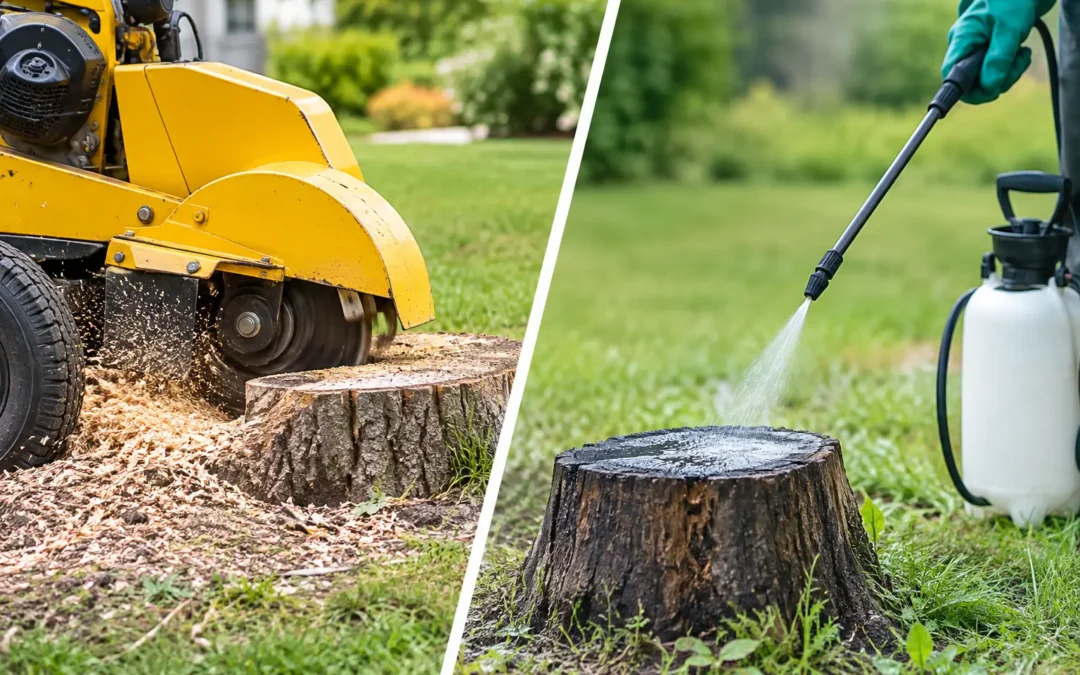
A freshly cut tree can look like progress until the remaining stump blocks a mower, interrupts a landscaping plan, or becomes a trip hazard near a walkway. When weighing stump grinding versus chemical removal, the real question is not simply which option costs less at the start. It is whether you need the stump gone promptly, how you plan to use the space, and how much time and maintenance you are willing to accept.
For most Edmonton-area homes, acreages, and commercial properties, professional grinding provides the more predictable finish. Chemical products can have a limited place in long-term decay plans, but they do not make a stump disappear quickly or leave the ground ready for immediate use.
How stump grinding works
Stump grinding is a mechanical process. A trained operator uses a purpose-built, gas-powered stump grinder fitted with carbide-tipped teeth. The cutting wheel works across the visible stump and into the root plate, breaking dense wood into small woodchips.
A professional crew typically grinds the stump at least 10 inches below ground level. This removes the hard, raised portion that catches mower blades, limits foot traffic, and makes a yard look unfinished. The resulting chips can be left for mulch where appropriate, hauled away, or incorporated into the surrounding site cleanup.
Grinding does not mean every distant tree root is excavated from the property. Full root excavation can require major digging and may disturb lawns, irrigation, underground utilities, sidewalks, or nearby landscaping. Instead, grinding addresses the root crown and the portion of the stump that causes the practical problems. Over time, the remaining roots naturally break down below the surface.
For a property owner planning sod, mulch beds, a fence line, or a construction project, that distinction matters. You get a usable, level area without turning a straightforward stump job into an unnecessary excavation project.
How chemical stump removal works
Chemical removal is better described as chemical-assisted decay. Many products use compounds intended to speed the natural rotting process after a stump has been cut low and drilled with a pattern of holes. The product is placed in the holes, usually mixed with water according to the label, then given time to penetrate the wood.
That time is the central trade-off. Depending on the stump species, size, moisture level, age, and local weather, the wood may take months or several years to become soft enough for easier manual removal. Dense hardwood stumps and large root systems are especially slow to break down.
The stump also remains in place throughout that period. It can still be a mowing obstacle, trip hazard, and visual issue. If the goal is to open space for a patio, new lawn, play area, driveway work, or commercial grounds maintenance, chemical treatment rarely meets the timeline.
Chemical products must also be used exactly as directed. Property owners should consider nearby vegetable gardens, drainage routes, pets, children, wells, ponds, and desirable trees before applying any stump-decay treatment. A product label is not a substitute for a site-specific plan.
Stump grinding versus chemical removal: the key differences
The clearest difference is speed. Grinding normally handles the visible stump in one scheduled service visit, while chemical removal begins a waiting period. Once grinding and cleanup are complete, the area can be prepared for reseeding, mulching, or a landscaping plan right away.
Safety is another major factor. A stump left in the ground is easy to forget until someone trips over it or a lawn mower strikes it. On commercial sites and rental properties, known trip hazards deserve prompt attention. Grinding reduces the stump below grade so the site is safer to maintain and easier to navigate.
The two methods also create very different cleanup requirements. Chemical treatment requires repeated attention: drilling, applying product, monitoring decay, then eventually breaking apart and disposing of softened wood. Grinding creates a contained pile of woodchips at the time of service. A careful crew can discuss where those chips should go and leave the work area tidy.
Cost should be considered beyond the initial purchase price. A chemical product may seem inexpensive, but it does not account for your labor, the months of lost yard use, potential mowing damage, or the eventual need to remove what remains. Professional grinding has an upfront service cost, but it provides a defined result and a clear finish line. A free, honest, no-obligation estimate lets you understand that cost before work begins.
When chemical removal may make sense
Chemical treatment is not always the wrong choice. It can be reasonable when a stump sits in a remote, low-traffic corner of a large property and there is no rush to use the space. It may also suit an owner who is comfortable following product directions, monitoring the area over time, and accepting that complete decay will be gradual.
Even then, expectations should stay realistic. Chemical treatment does not eliminate the need for patience, and it does not prevent all of the issues associated with an aging stump. Insects may still use decaying wood for shelter, fungal growth can still appear, and shoots may develop from certain species if the root system remains active.
Burning is sometimes paired with chemical treatments, but it is not a simple shortcut. Fire restrictions, safety risks, smoke, underground root voids, and local rules can make burning a poor option, especially in built-up neighborhoods. It should never be treated as an automatic next step.
When professional grinding is the better fit
Grinding is usually the practical choice when the stump affects how a property functions. That includes stumps near driveways, sidewalks, decks, play spaces, garden beds, fence projects, parking areas, and regular mowing routes. It is also the stronger option when a property manager needs a dependable schedule and documented cleanup rather than an open-ended decay process.
It is particularly useful after tree removal. Leaving the stump behind can encourage nuisance insects, support fungal growth, and create a place where new suckers emerge. A ground-down stump improves the appearance of the site while removing the most troublesome portion of the old tree.
The quality of the work matters. An operator should assess access, stump diameter, nearby structures, surface conditions, and potential obstacles before starting. Specialized equipment and carbide-tipped teeth allow the crew to work efficiently through tough wood, but good service also includes protecting the surrounding property and cleaning up after the job.
At Stump Chomper, the goal is not to make the stump merely less noticeable. It is to grind it below grade and leave the area in a condition that supports what comes next, whether that is grass seed, mulch, a new garden, or a larger property project.
What to expect after a stump is ground
The ground area may contain a mix of soil and woodchips after grinding. If you plan to reseed, remove excess chips and add topsoil as needed so seed has solid contact with soil. For a planting bed, the chips can often be used as mulch, provided they are not piled against the stems of new plants.
Avoid planting a new tree in the exact center of the former stump right away. Remaining roots and settling material can interfere with establishment. Choose a nearby location with adequate spacing, fresh soil, and room for the new tree’s mature root system.
If the site is intended for hardscaping or construction, tell the grinding crew before service. The desired depth and cleanup plan may differ when the area will support a shed pad, pathway, fence post, or other structure.
A stump should not be allowed to dictate how you use your property for another season. If you need the space clear, safe, and ready for a plan, a professional assessment can turn an awkward leftover into ground you can use with confidence.